Public History – Community Art – Heritage Textiles
Author: everystitchastory
Hello I'm Laura a public historian, textiles practitioner and community arts facilitator and I run Every Stitch A Story. My work champions the power of textiles to help individuals and communities uncover, explore and document past and present narratives by creating and preserving tangible textile objects.
This week I visited The National Holocaust Centre and Museum for the first time. Based in Newark, Nottinghamshire it’s only an hour from my Derbyshire home. I have wanted to visit for years, but I’ve never quite managed to bring myself. Let’s be honest, it’s not a visit you expect to be joyous.
A participant of the project had said she was interested in representing one of the ‘Windermere children’ and unbelievably one of those children, Arek Hersh MBE, was due to speak at the centre this week. So, we agreed to go together. Unsure what to expect and a little nervous we were prepared for a day of sadness and heartbreak, but what surprised us both was the hope we left the centre with.
Suzanne Rappoport’s doll ‘Shaina. Left in hiding after escaping. Kept in safekeeping by a family near Paris and reunited with Suzzanne 60 years later.
Yes, we cried. The stories and experiences shared through the exhibitions (and we only got to see one ‘The Journey’ as there is so much to see), was thought provoking, shocking and sad. The film of Arek’s experiences was truly horrifying. But Arek himself was incredible. At 95 years old, he sat on stage in a big red leather chair and told us of his experience.
“1000 people in a barracks. We slept on wooden planks, six to a bed, 3 beds high. I rolled my striped uniform and put it under my head.”
He told us of the lack of food, the inhumane conditions and daily brutality. He showed us his Auschwitz number, tattooed on his left inner arm, and spoke about the dehumanisation of prisoners. Much of what he said was impossible to imagine, what was clear was that it is a miracle that he survived. But he did. He went on to live a full life, became a mechanic, married and had children. He is a successful author and in 2009 was awarded an MBE for service in the field of Holocaust education.
Arek was so passionate that people heard his story, he is both serious and lighthearted. A man with a twinkle in his eye who has great comedic timing. Amongst the darkness of his story, he was keen to share the moments of light, the people that showed kindness by giving food and shelter, the friends he made along the journey, this fish he stole from an officer and cooked an ate with fellow inmates and those who supported his recovery after the war was over.
It was an honor to meet him, and I am so glad he will be represented in the 80 Candles memorial Quilt. A full list of names selected so far to be included can be found here.
Arek Hersh MBE with Laura Burrill, 7th October 2024, The National Holocaust Centre and Museum.
If you have signed up to help create the 80 Candles Quilt, thank you! If like me the thought of picking just one person out of the millions of Jews and others who suffered under Nazi persecution is a little overwhelming, here are some tips and reliable trustworthy resources which I hope will be helpful.
Pick someone you can relate to. For me I wanted to find someone who stitched or sewed during their persecution; by searching museum archives I was led to Sonja Jaslowitz who embroidered a belt during her incarceration. Our connections with other humans are multiple and diverse, think about what may connect you… work, hobbies, faith, home, birth date, family, gender the list is endless.
What do you not know? Use this as an opportunity to expand your knowledge of the Holocaust. It didn’t just happen in Germany and Poland and wasn’t restricted to the persecution of Jewish people. Numerous other countries and social groups we affected and persecuted, many of these stories are rarely told.
Use reliable resources. There is a huge amount of information available on the internet. Use resources wisely and ask yourself if the source can be trusted. Below is a list of resources I would recommend as a starting point:
Holocaust Memorial Day Trust (hmd.org.uk) – The Holocaust Memorial Day Trust (HMDT) is the charity established and funded by the UK Government to promote and support Holocaust Memorial Day (HMD) in the UK. It has an excellent collection of resources including testimonials and personal stories.
The Holocaust Explained: Designed for schools – This website has been created to help learners understand the essential facts of the Holocaust, its causes and its consequences. The Holocaust Explained includes hundreds of pages of content based on a wide variety of source material in the form of videos, images and text. It is managed by The Wiener Holocaust Library. The library is the oldest archive of material on the Nazi era and the Holocaust in the world. It is Britain’s national Holocaust archive.
Take care of yourself. This is a challenging and heartbreaking subject. The loss of life, liberty and freedom alongside, the terror and brutality are heart wrenching. Remember that together we are doing important work, that by keeping the flame of remembrance alive we are helping to guard against future genocide. Take a break, share your research at the workshops and remember that these are a safe space, not only to share what we have learned but the impact this is having upon us. Self-care is important, get some fresh air, do something you love. You can also contact me laura_burrill@outlook.com
Trying to pick just one person to represent in a quilt in memorial to those affected by the Holocaust is daunting. As a champion for telling stories through the creation of textiles I knew I wanted to honor a fellow ‘sewist’, someone who had stitched something whilst in a concentration camp.
Meet Sonja Jaslowitz, a young German speaking, Jewish Romanian girl whose creative talent lives on through her poetry and embroidered belt.
Sonja’s story…
On 4th June 1942, Sonja Jaslowitz, together with her German speaking Jewish parents, Lotte and Adolf Jaslowitz, were deported to Cariera de Piatra Concentration and Camp.[1]
Sonja was just 15 years old. She left behind her home, a first floor flat owned by her grandmother, in the bustling town of Czernowitz, Romania. [2] Czernowitz had a large Jewish community, but as fascism rose in popularity across Romania, antisemitism increased. [3] Between 1941 and 1944 approximately three hundred thousand Jews and Roma perished in the Romanian administered region.[4]
Sonja and her family were sent eastward to a region that came to be known as Transnistria. Transnistria was a ‘holding’ or ‘containment’ place for deported Jews, a ‘dumping ground’ to await mass transfer across the Bug River.[5] The family spent time in the makeshift Cariera de Piatra concentration camp. Once a granite rock quarry, inmates found ‘shelter in wrecked guard and storage sheds that had been built partially into the rock’. [6] More than five hundred people were crammed into wooden barracks built to accommodate just eighteen. [7] From here they were sent to Obodovka Concentration Camp and then onto the Tiraspol ghetto. With limited documentation we can only imagine how Sonja and her parents managed to survive the brutal environment. Together they would have faced deprivation, starvation, dehydration and bitterly cold temperatures.
Amongst all this horror Sonja chose to create, and perhaps more remarkably some of her creations survived. These surviving acts of resistance include a black blanket-stitched belt embroidered with whimsical flowers, mushrooms and quaint scenes of houses with picket fences, trees, fluffy clouds and sunshine; and a body of poetry written in German, Romanian and French. Composed in the camps and ghettos of Transnistria her poetry gives us a glimpse of the girl she was, thoughtful, observant, resourceful, sarcastic, courageous, defiant.
Using simple verses and metaphorical phrases Sonja conveys her deeply felt emotional state of pain and longing whilst painting a picture of her surroundings. She gives agency to hope, nurturing her confidence and mental energy in order to survive.
Sonja and her parents were liberated in 1944 and repatriated to the Romanian capital, Bucharest. Here she typed an illustrated some of her poems. Sadly, she was killed during the shelling of Bucharest, April 1944. Collateral damage victim of shrapnel from Allied bombs intended for German-controlled oil installation near Romanian capital.[10] Sonja’s father died shortly afterwards having contracted tuberculosis in the ghetto. Her mother moved to England, bringing with her Sonja’s creative works.
How would Sonja feel about her work being shared? Did she create privately for herself or intentionally to share her story? Was she determined to document her experience, exercising her own limited agency within the confines of Nazi rule, or simply filling time?
There is a vulnerability in creating and being creative, works set free into the world can easily be dismissed, ignored, criticized or misunderstood. But there is also power in creating art; the power to tell a story and share ones inner most self for others to see. It provides space to contemplate and regulate emotion and room for play and experimentation. Sonja’s embroidered belt is what drew me to find out more about her, I was sure an object of such whimsy and beauty created in such horror had a story to tell. I wonder what Sonja would think of the square I am dedicating to her?
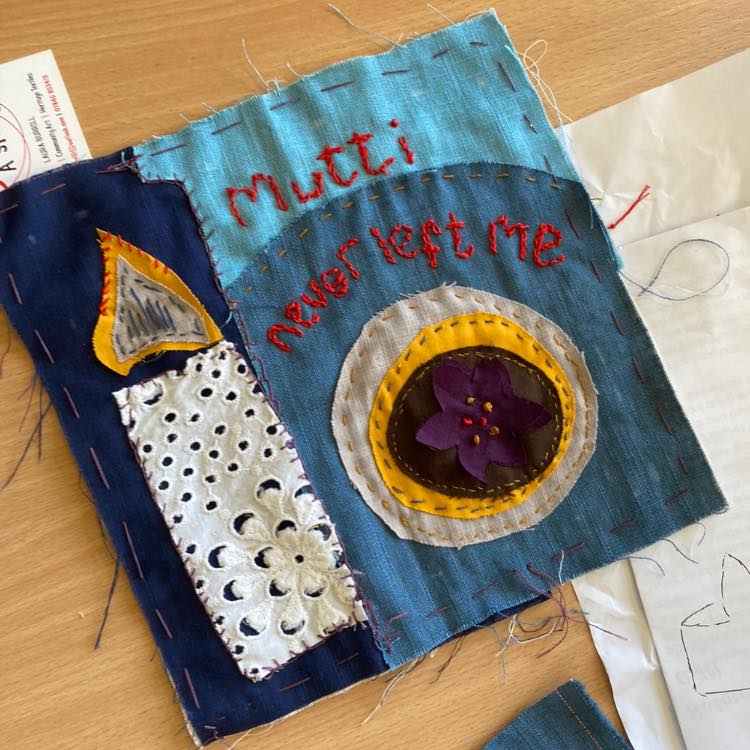
Square one, work in progress. ‘Remembering Sonja Jaslowitz’, Laura Burrill, linen on calico.
[5] Hirsch, K, Spitzer, L, ‘Small Acts of Repair: The Unclaimed Legacy of the Romanian Holocaust’, Journal of Literature and Trauma Studies, Volume 4, No 1-2, Spring/Fall, 2015 p.13-42p25
[6] Hirsch, K, Spitzer, L, ‘Small Acts of Repair: The Unclaimed Legacy of the Romanian Holocaust’, Journal of Literature and Trauma Studies, Volume 4, No 1-2, Spring/Fall, 2015 p.13-42P.27
[9] From poem ‘Longing’, S. Jaslowitz (Translated) Hirsch, K, Spitzer, L, ‘Small Acts of Repair: The Unclaimed Legacy of the Romanian Holocaust’, Journal of Literature and Trauma Studies, Volume 4, No 1-2, Spring/Fall, 2015 p.13-42, p.29.
[10] Hirsch, K, Spitzer, L, ‘Small Acts of Repair: The Unclaimed Legacy of the Romanian Holocaust’, Journal of Literature and Trauma Studies, Volume 4, No 1-2, Spring/Fall, 2015 p.13-42, p.14.
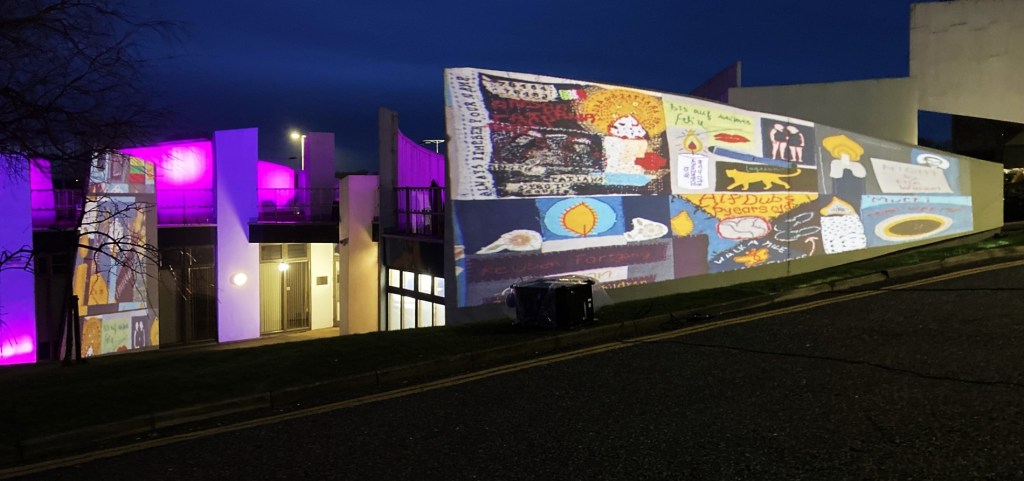
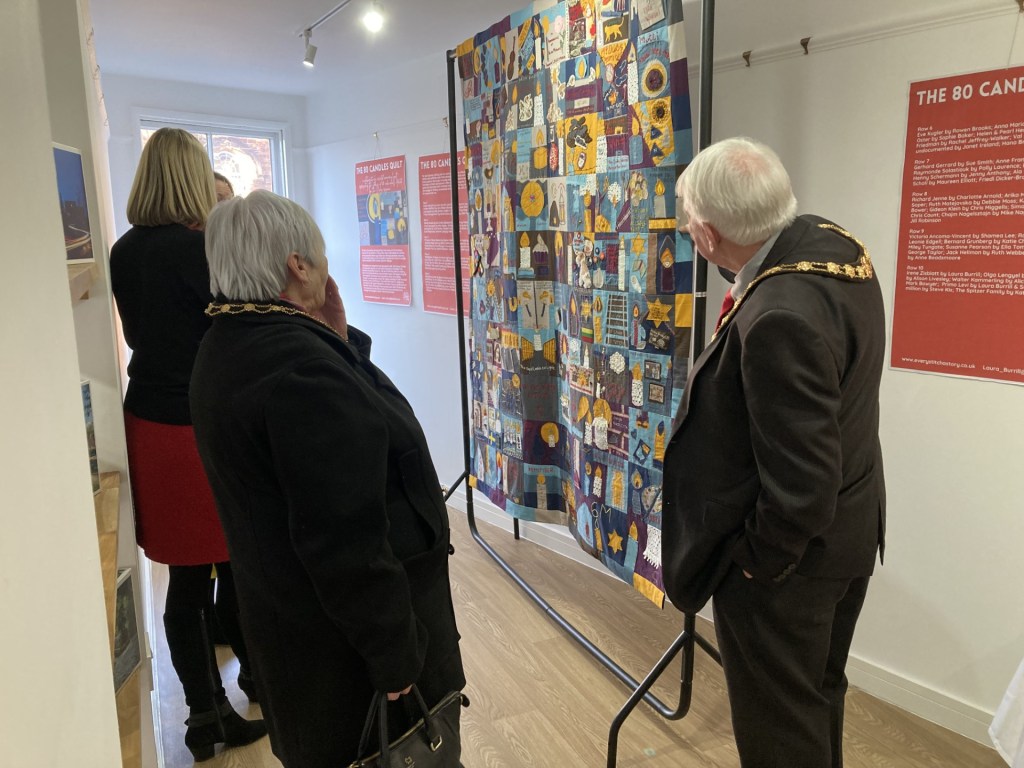
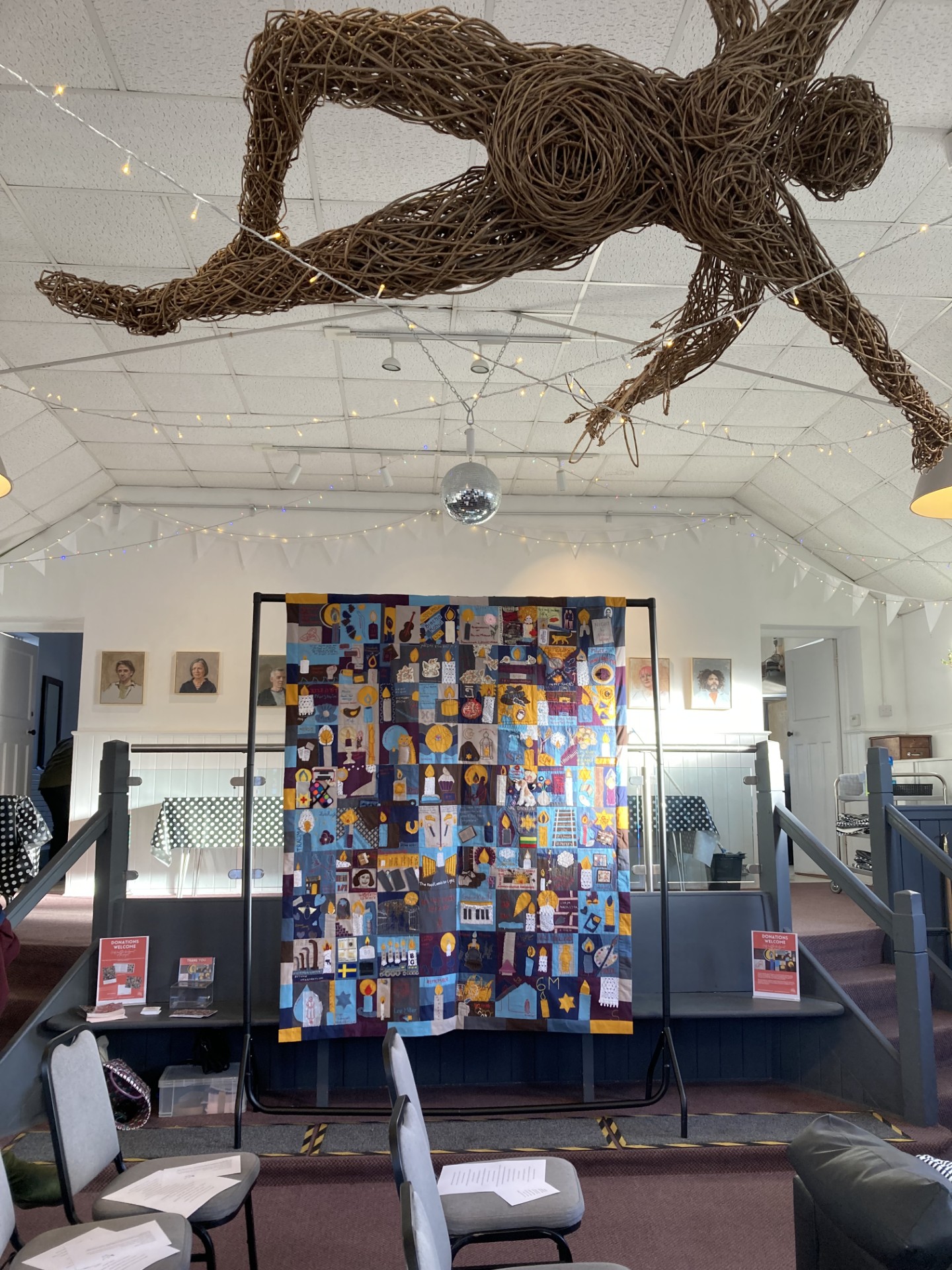
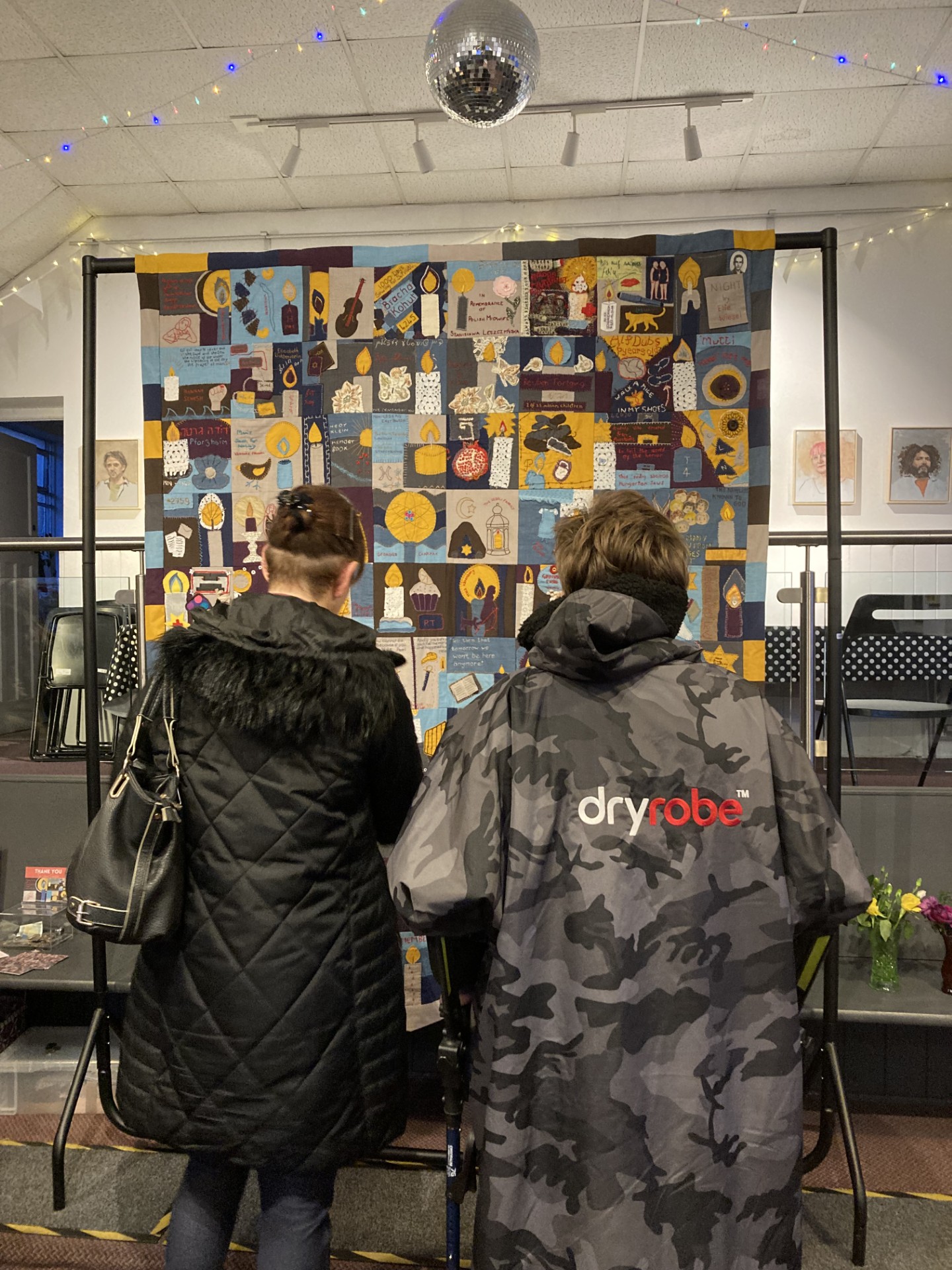
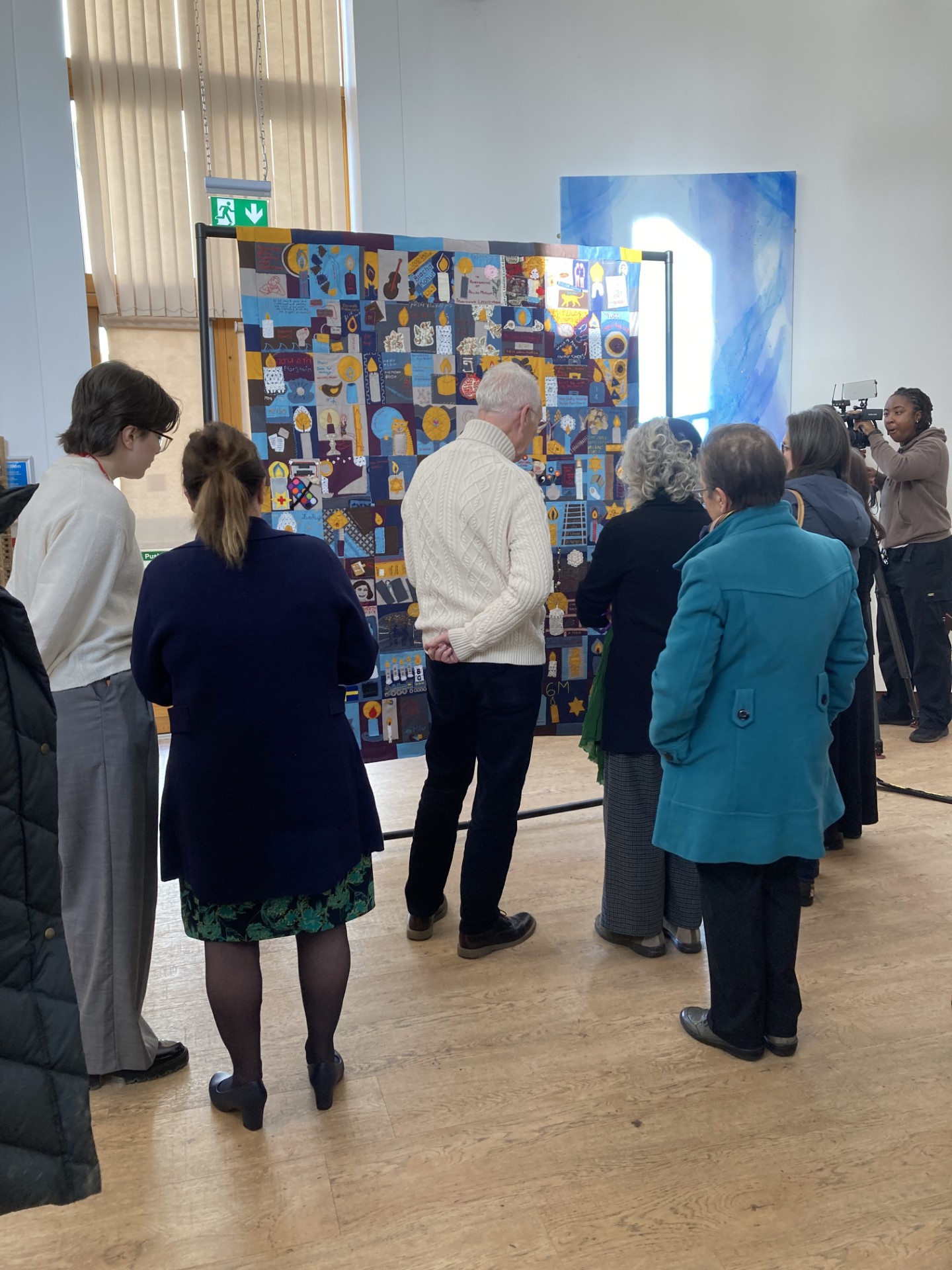
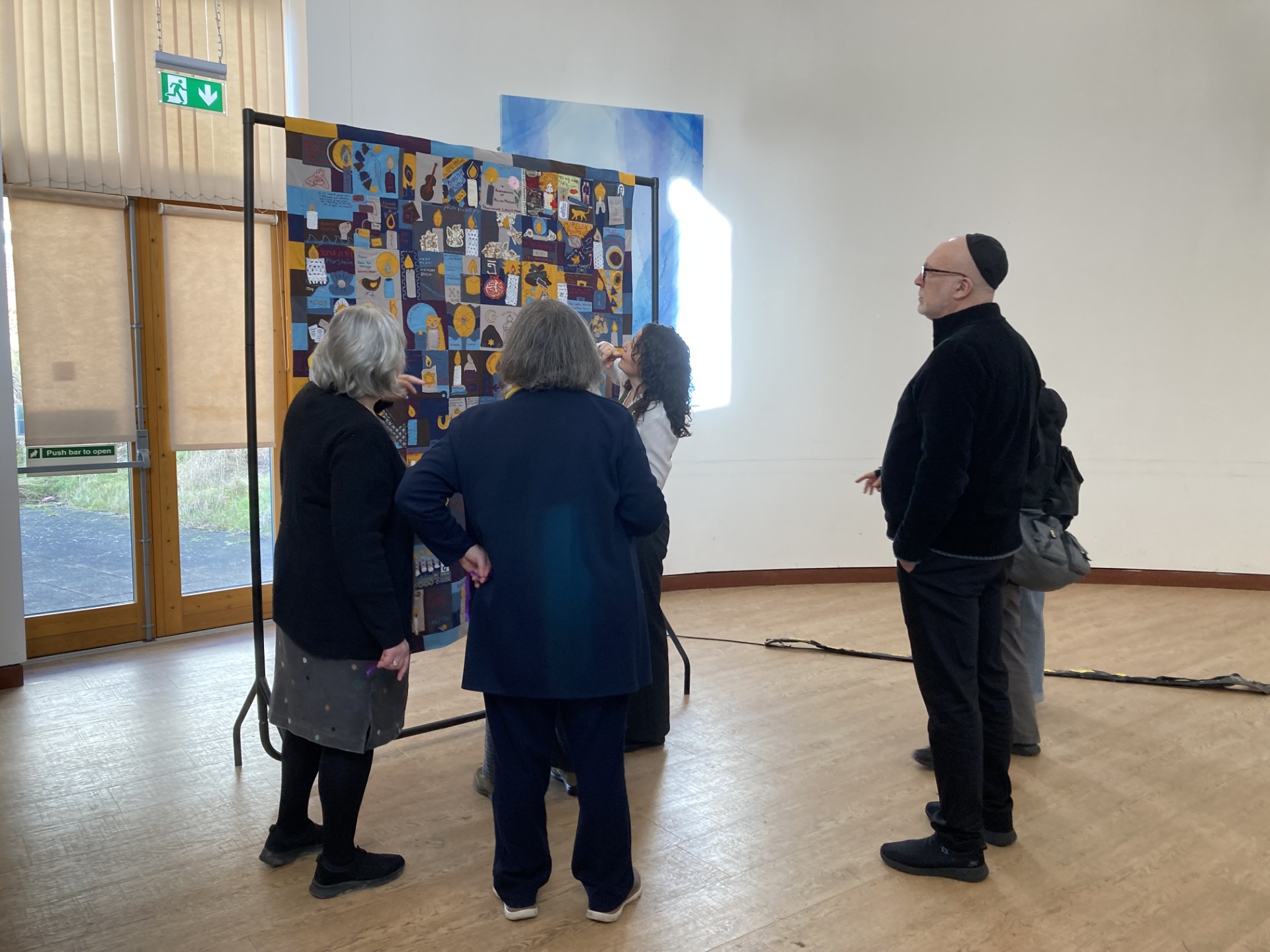
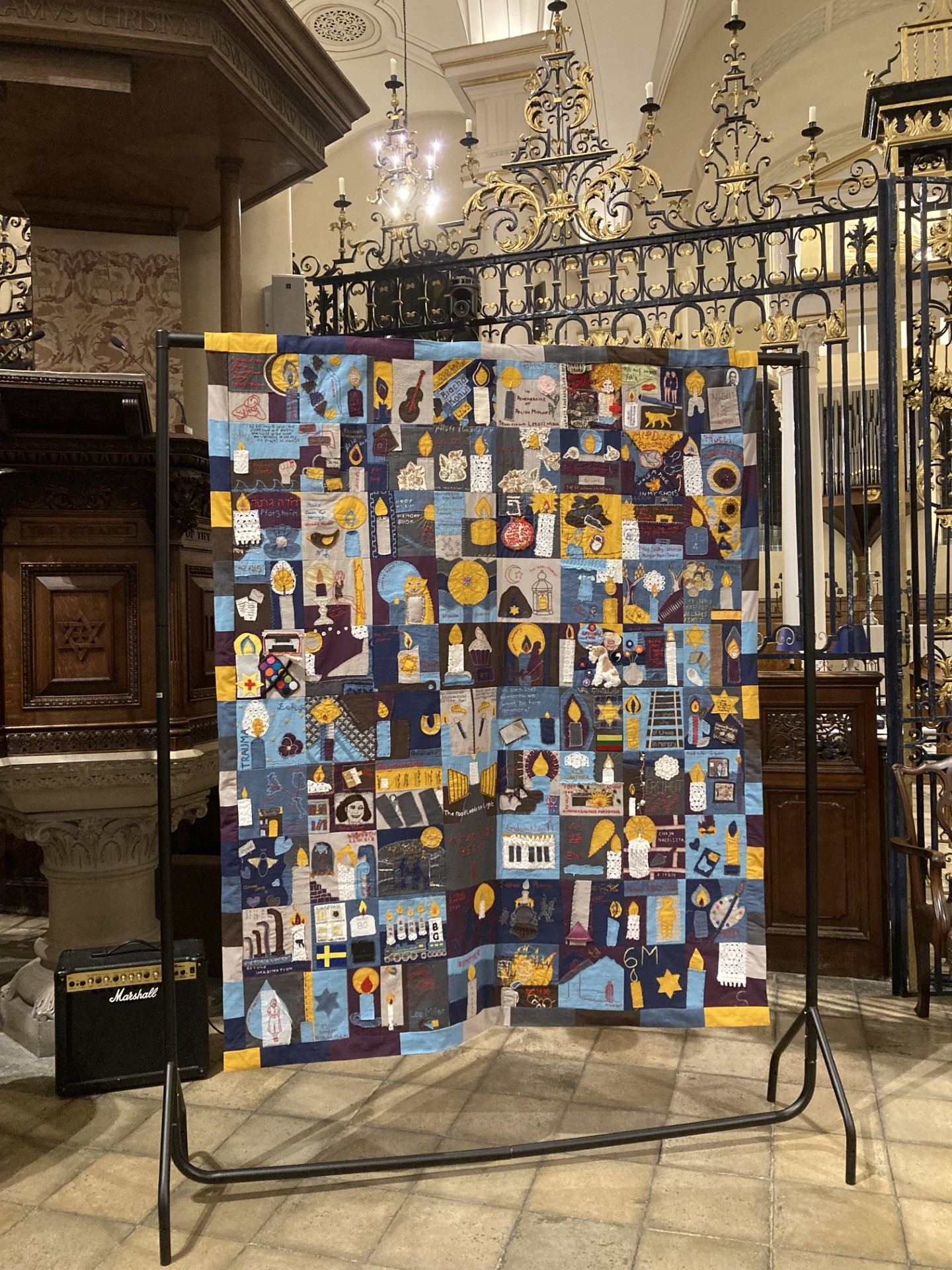
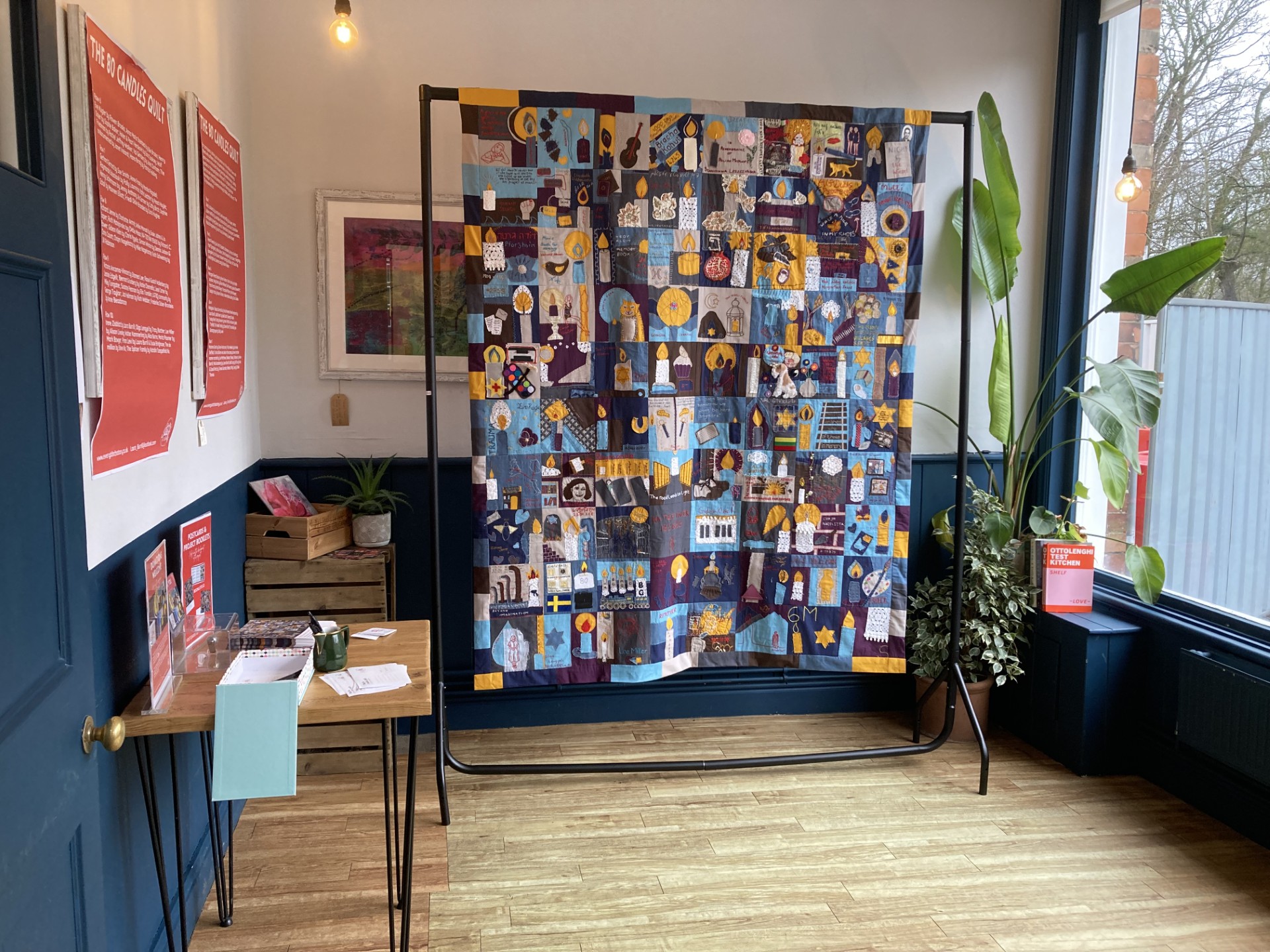
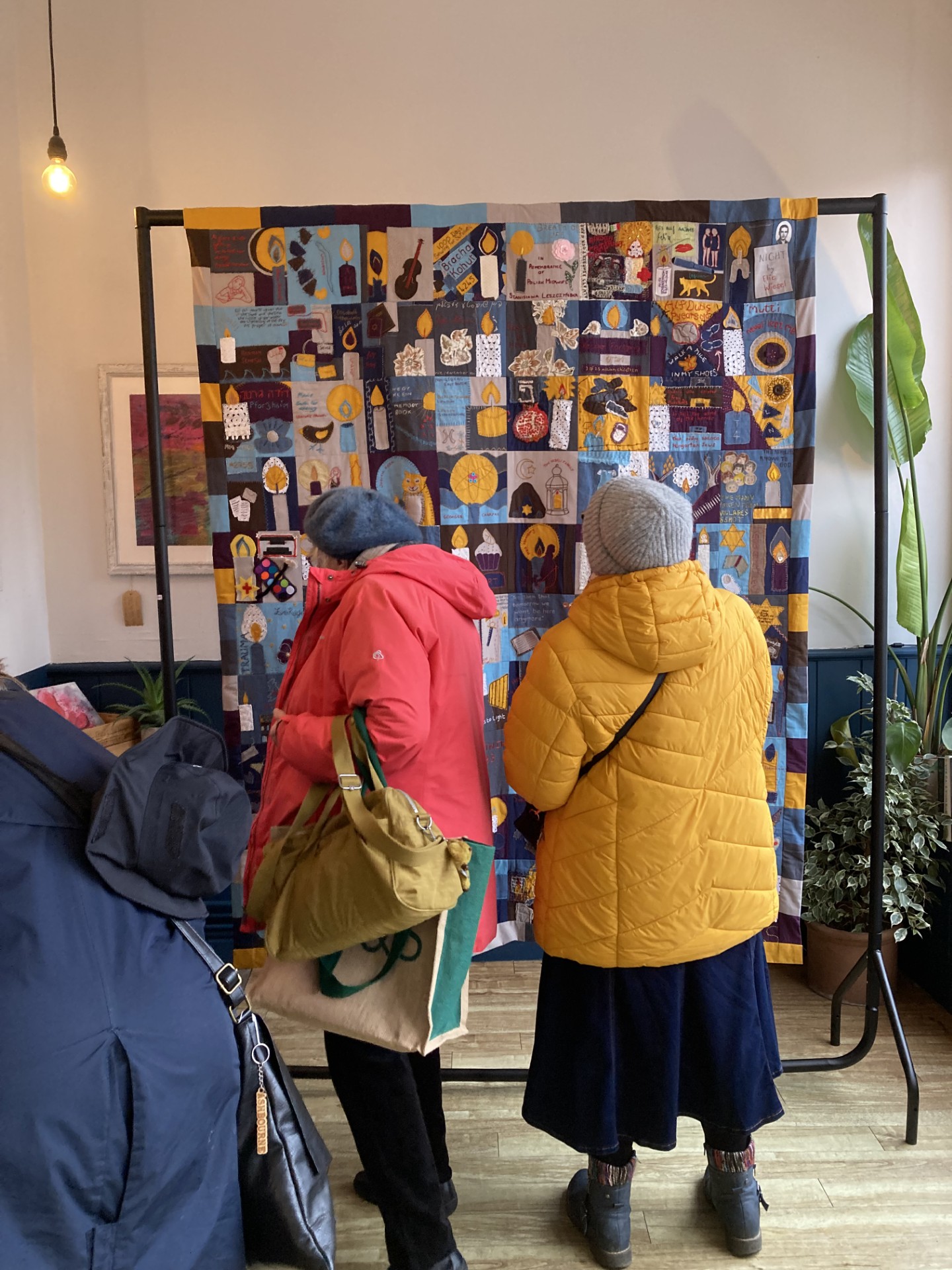
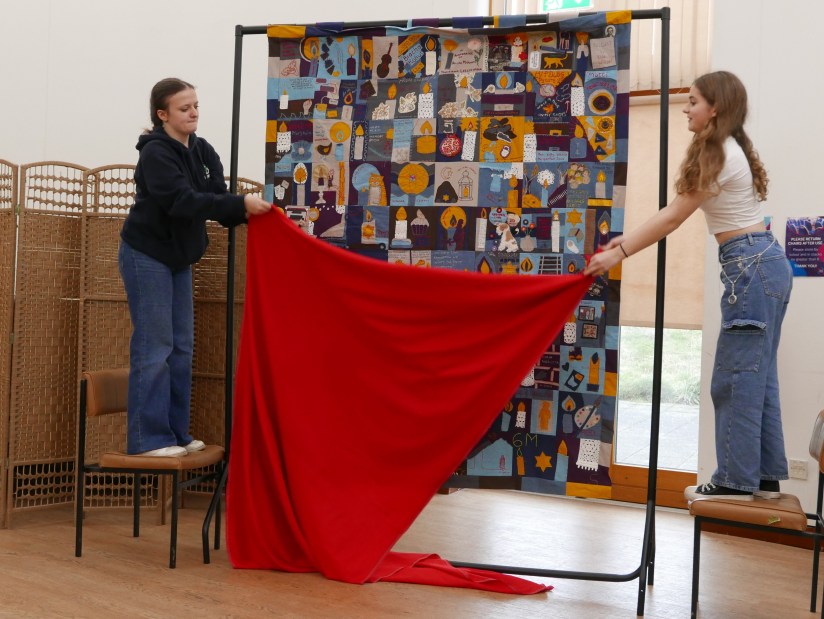
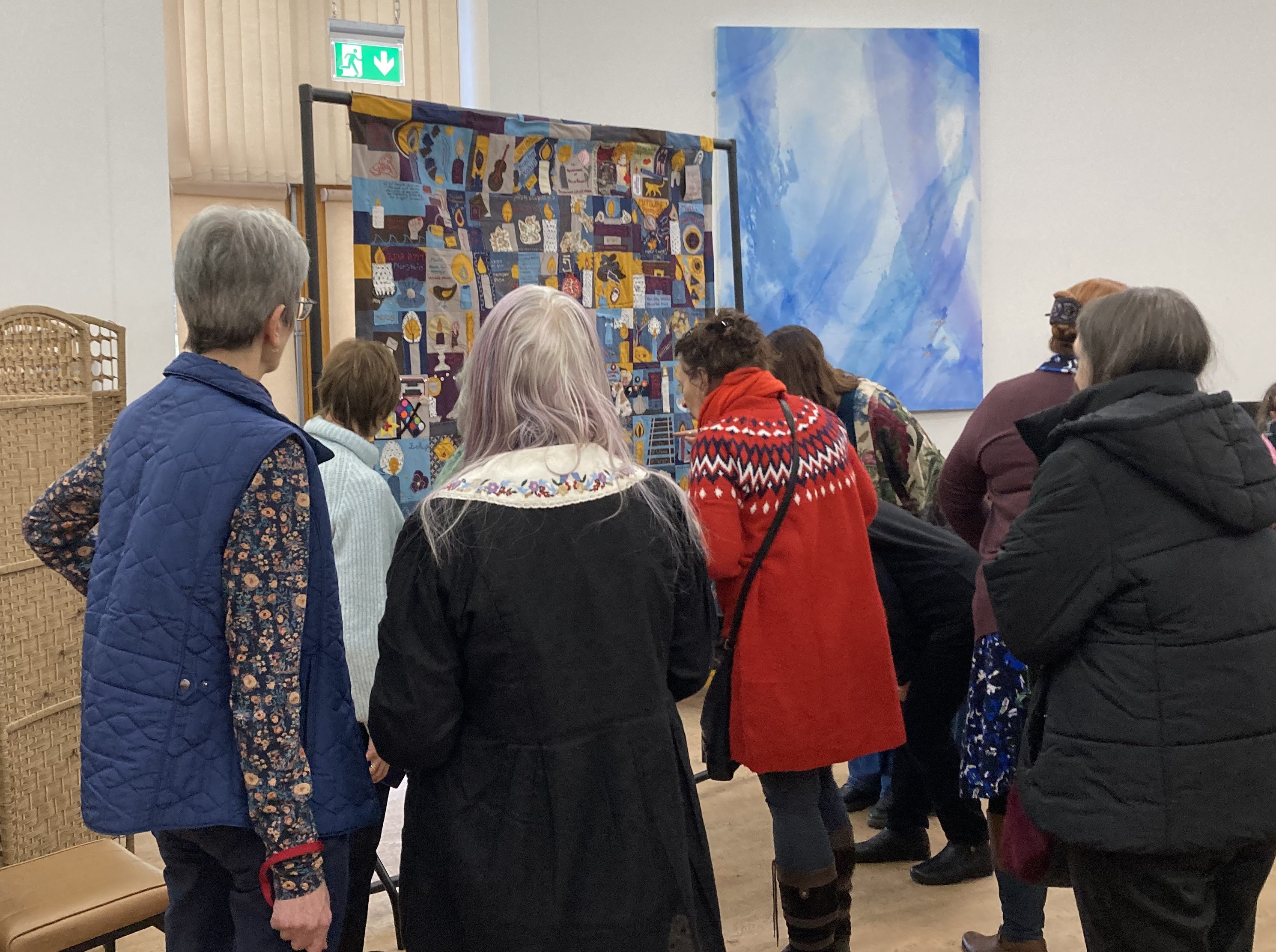
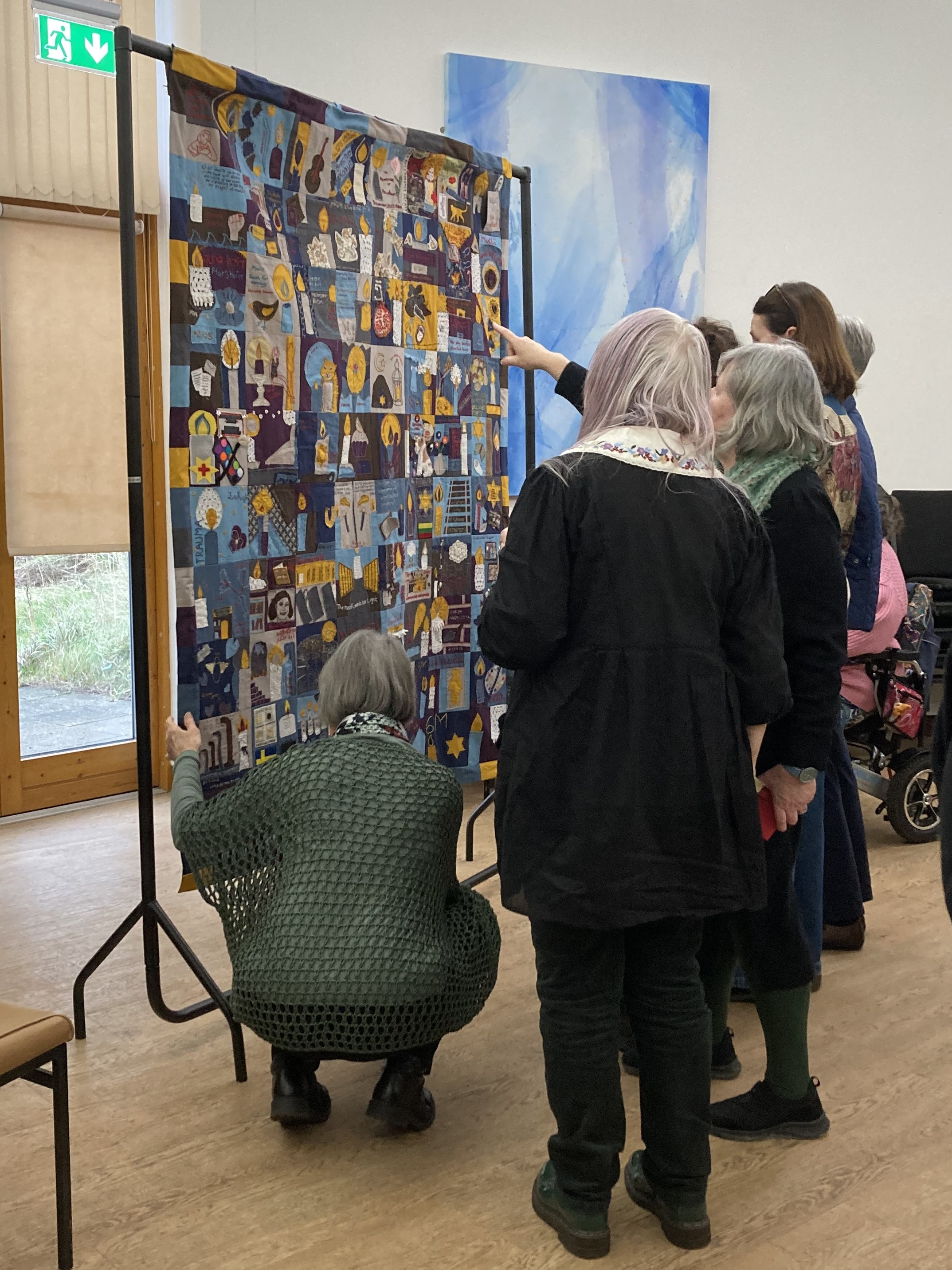
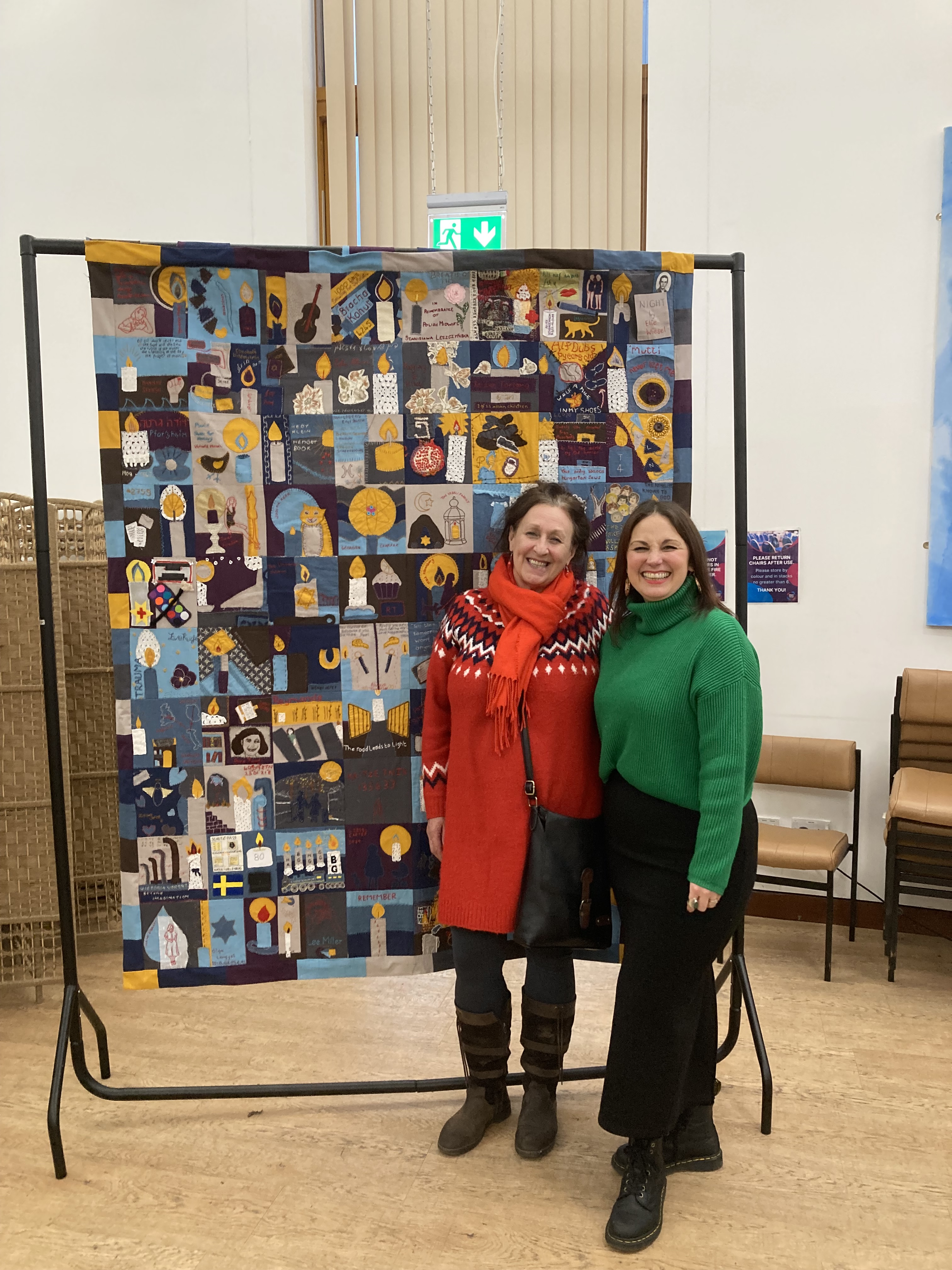
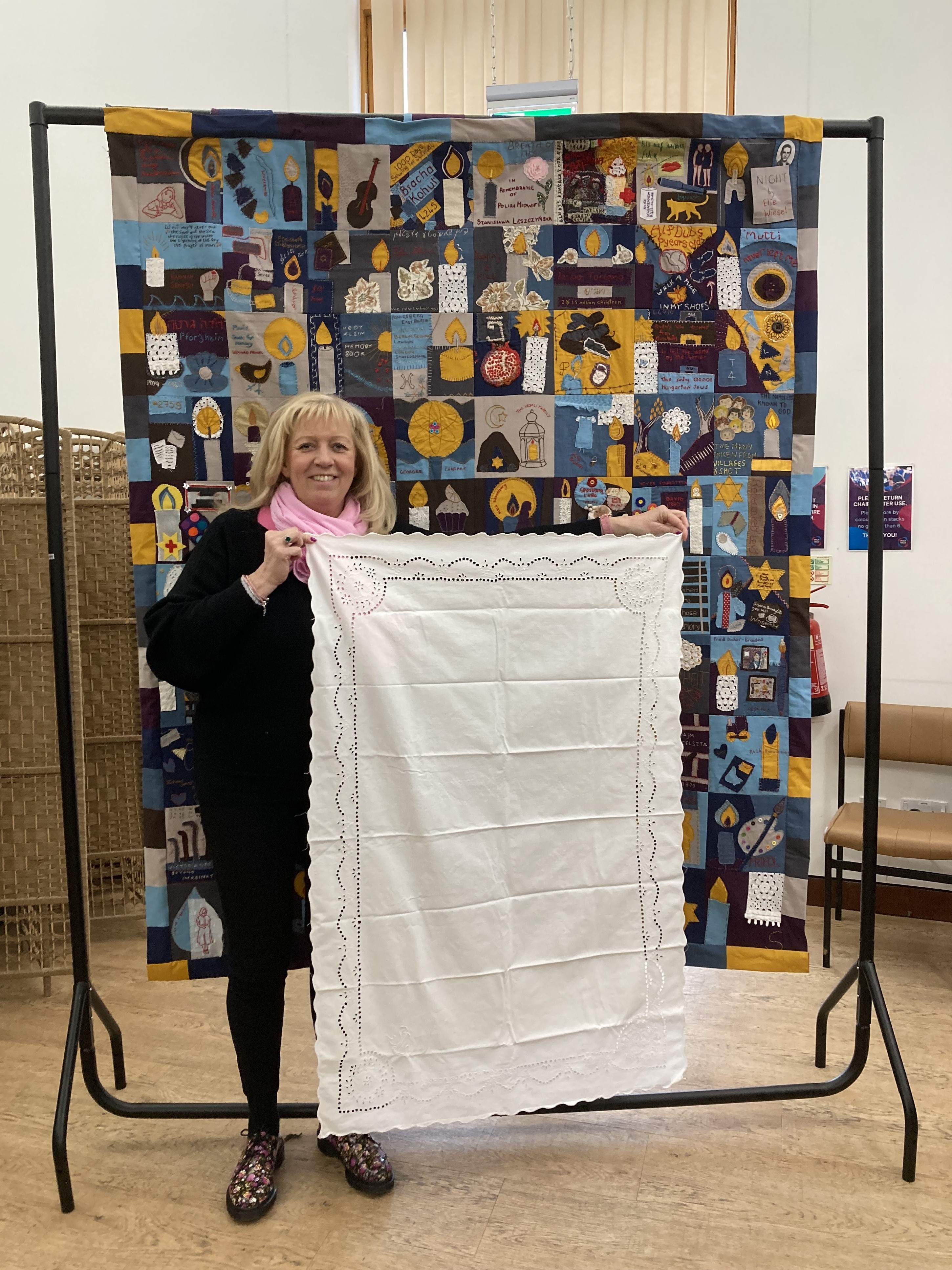
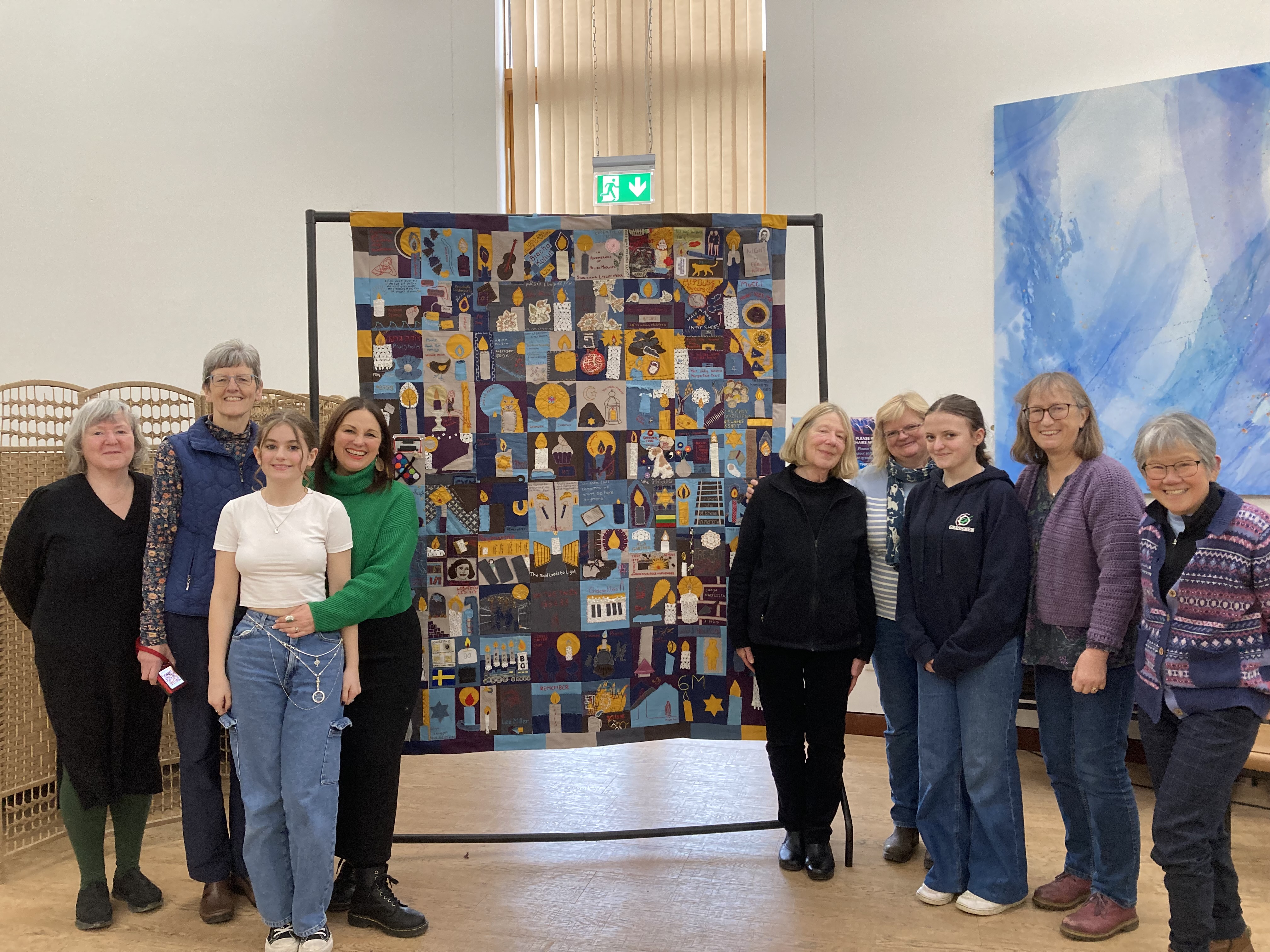
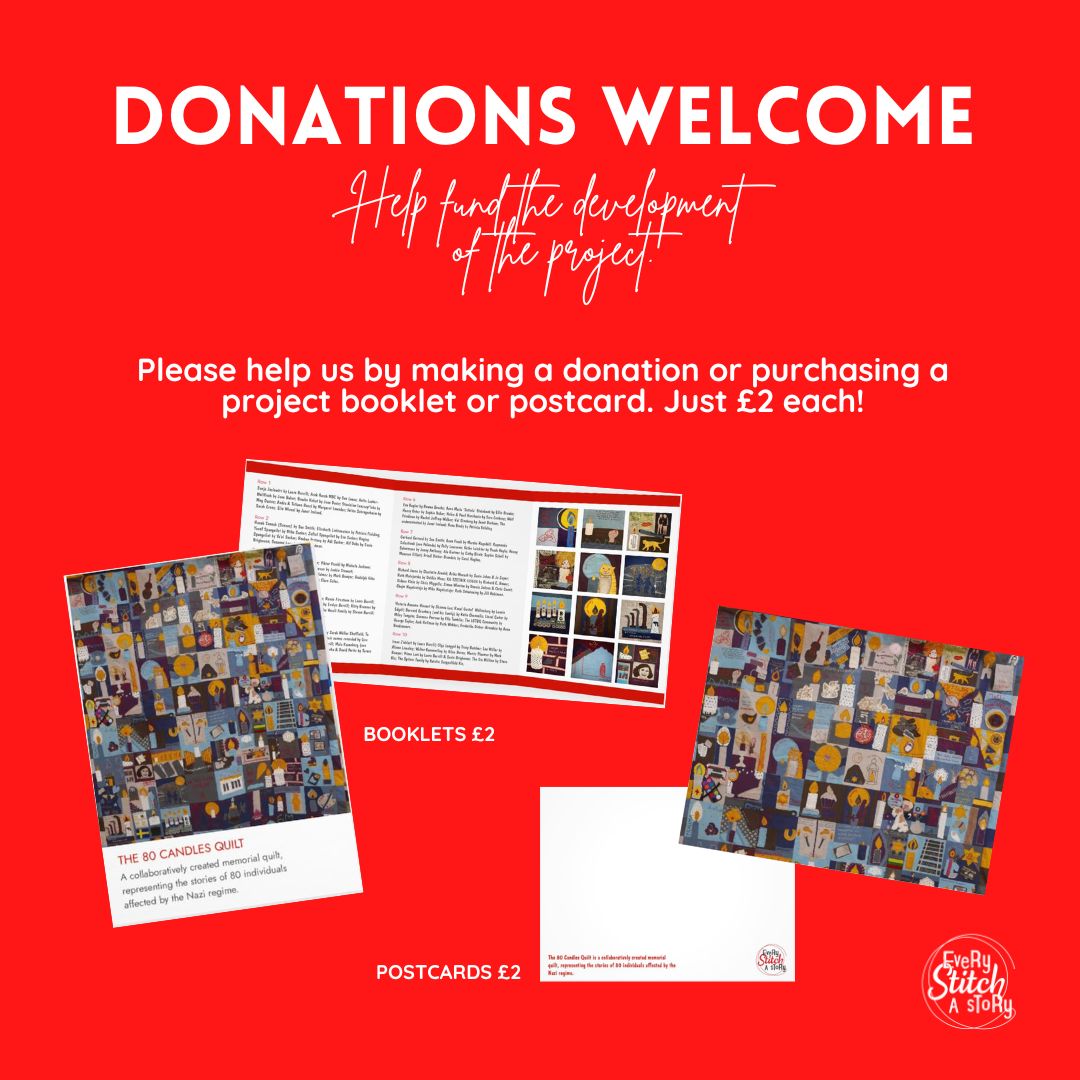
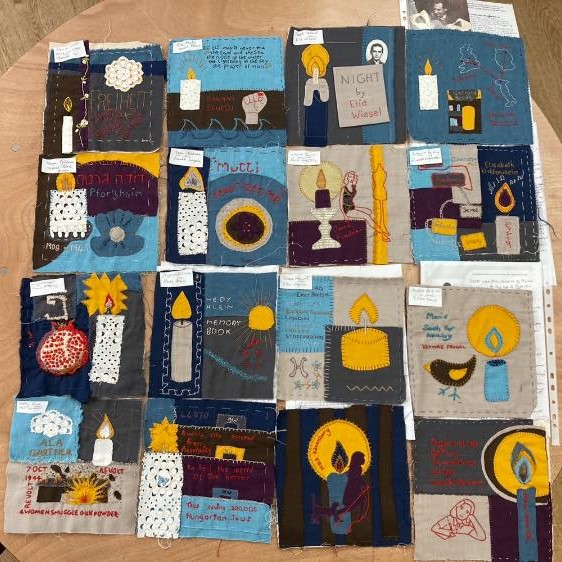
2025 marks the 80th anniversary of the liberation of Auschwitz-Birkenau. I invite you join me to learn about those affected by the Holocaust and create a slow stitch patchwork memory quilt. Inspired by Holocaust Memorial Day Trusts‘ 2025 theme, the quilt will depict 80 candles, each candle will represent an individual affected by the holocaust and their story.
Participants will research and connect with real human stories of persecution, loss and survival which they will then share by creating a slow stitched square representing an individual’s story.
Holocaust Memorial Day is held on 27th January each year to remember the 6 million Jews murdered during the Holocaust, alongside the millions of people murdered under Nazi persecution of other groups and during more recent genocide in Cambodia, Rwanda, Bosnia and Darfur. (The 27th of January marks the anniversary of the liberation of Auschwitz-Birkenau, the largest Nazi death camp.)
Participants and supporters can take part in numerous ways:
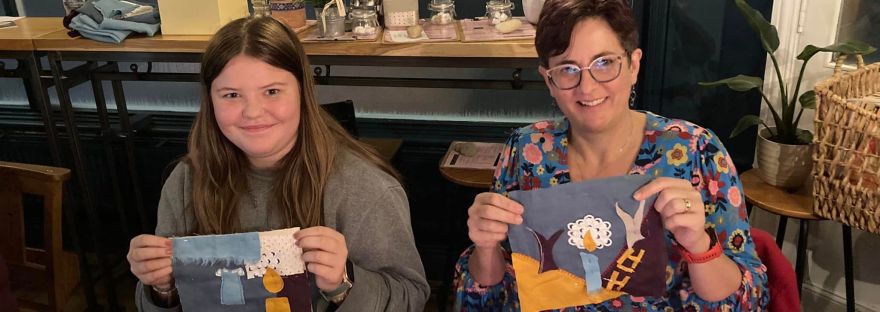
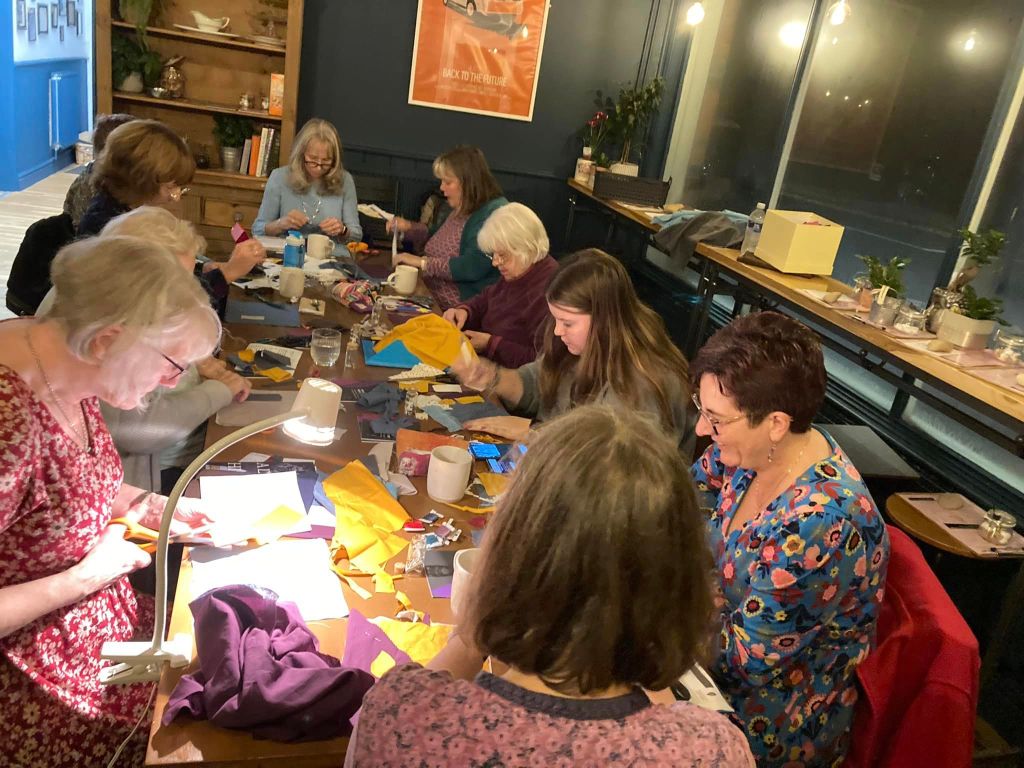
Guided workshop:Through fully facilitated workshops participants will be guided in the process of crafting their own slow stitched embroidered square inspired by their research into an individual affected by the Holocaust or genocide.
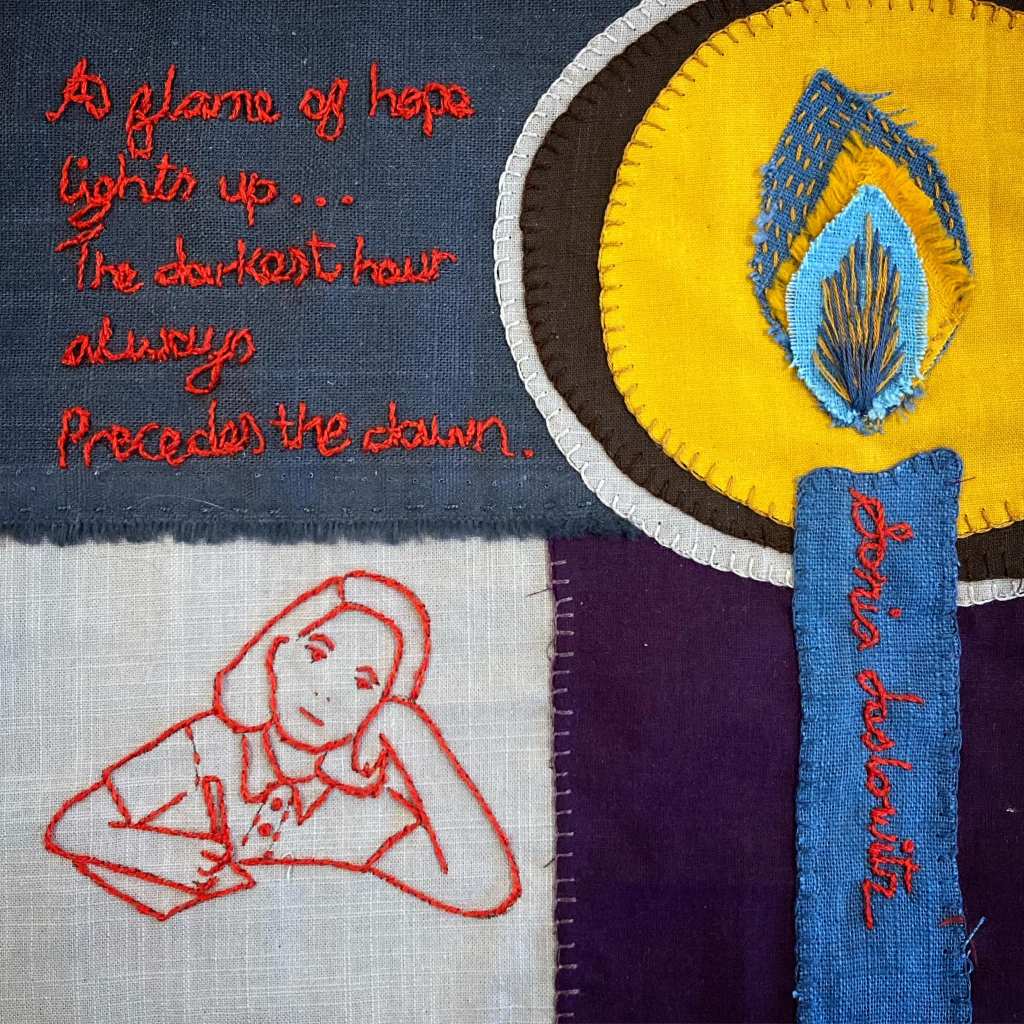
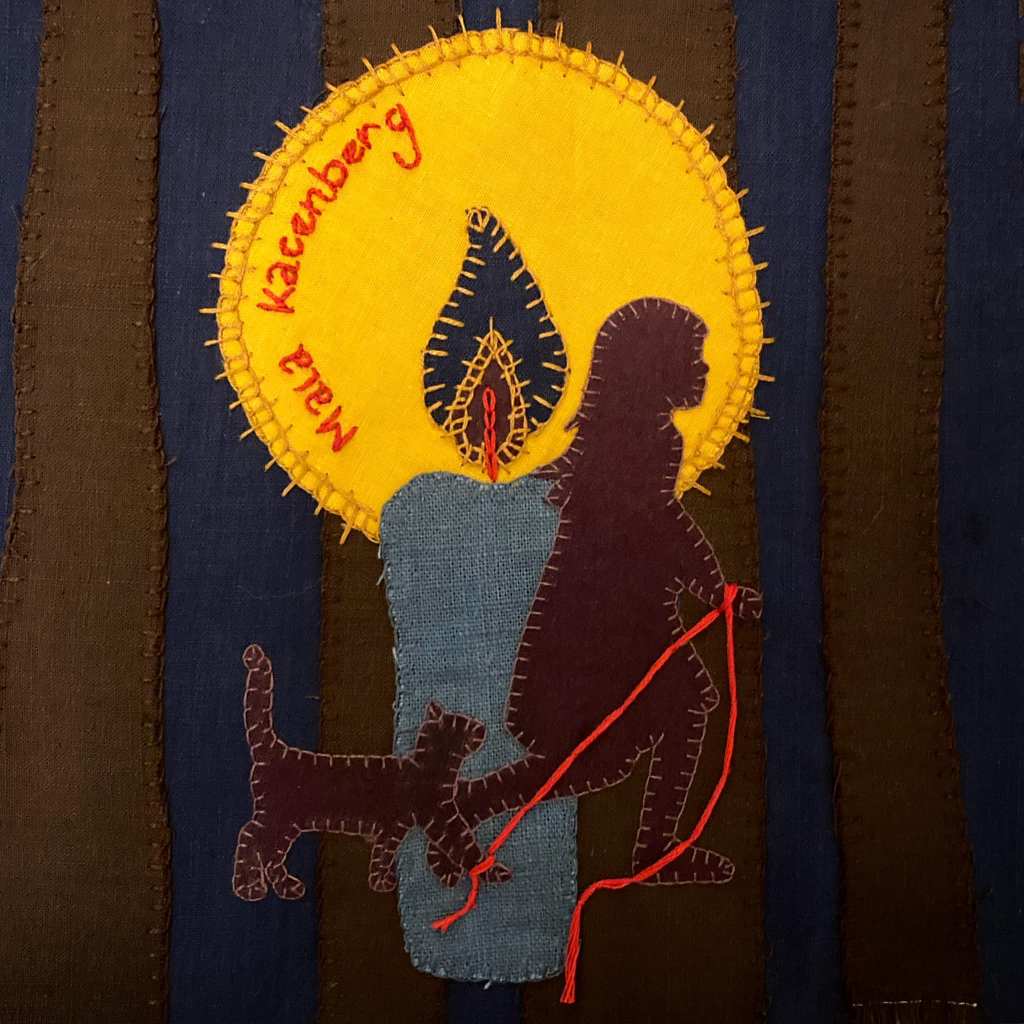
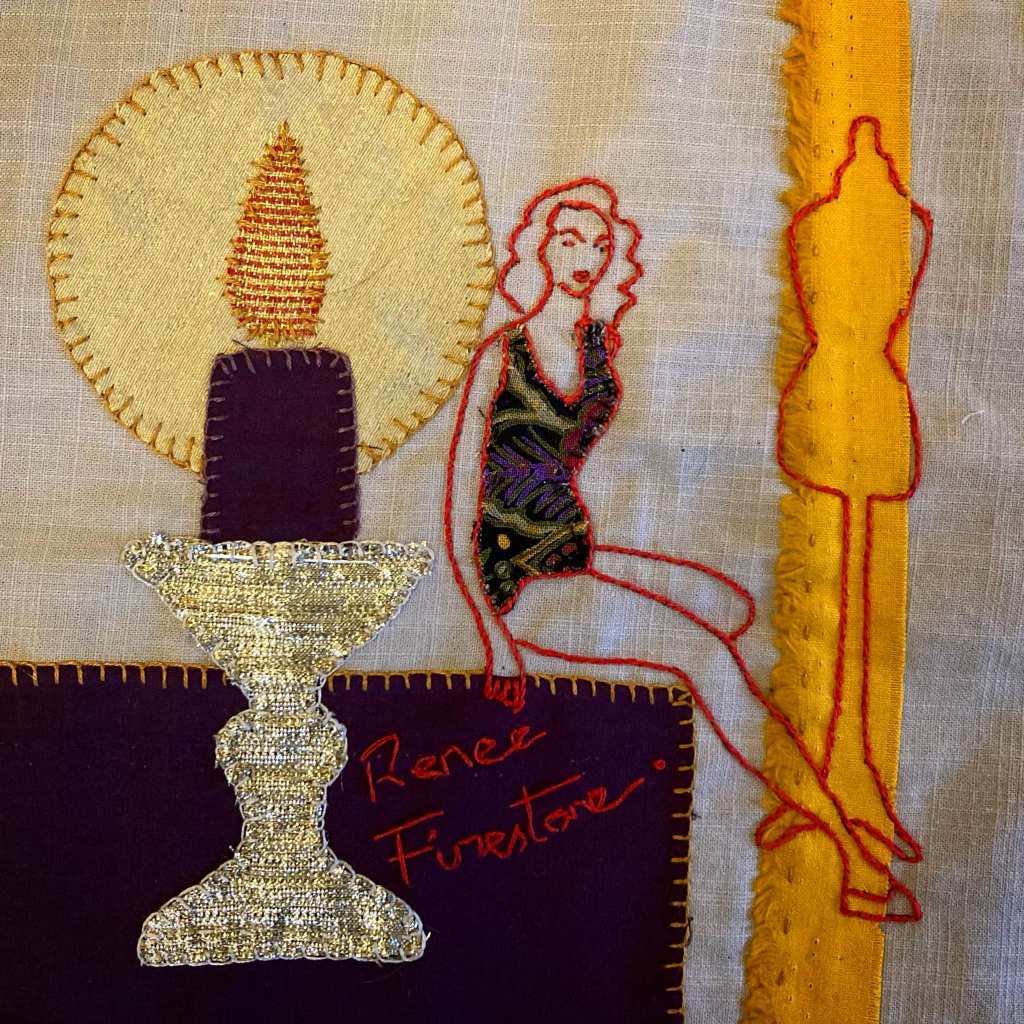
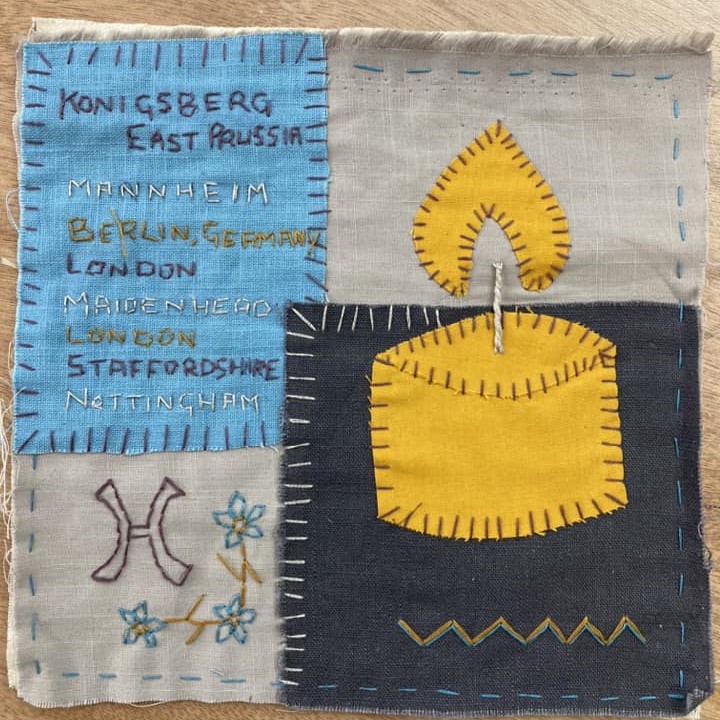
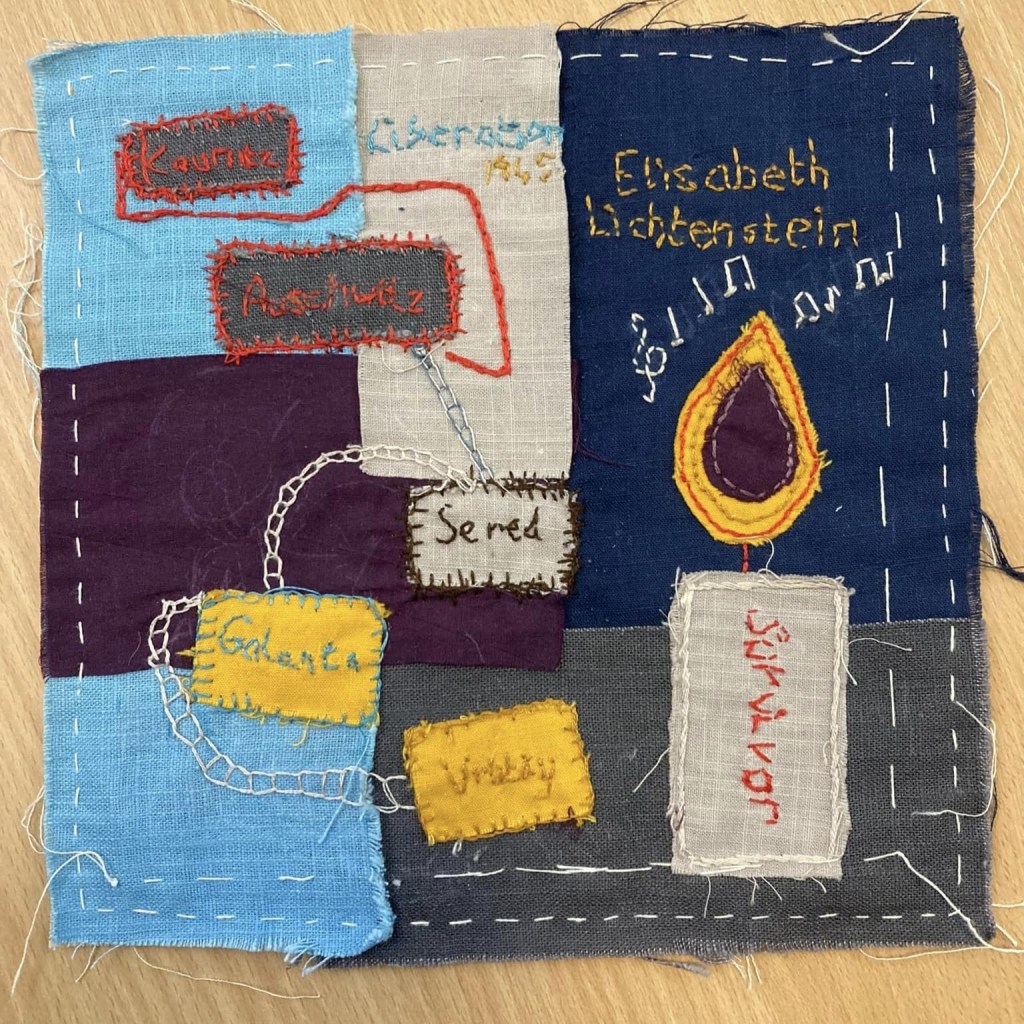
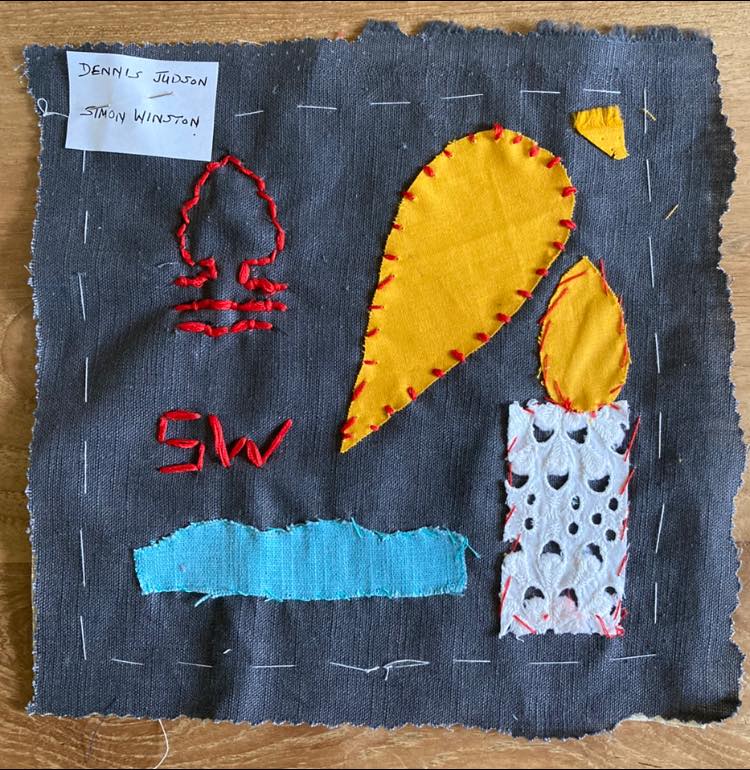
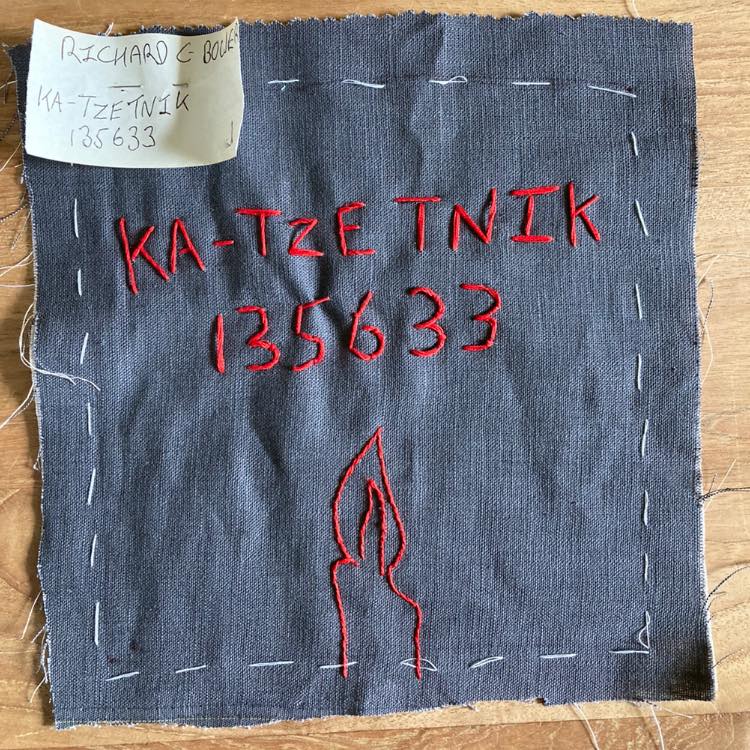
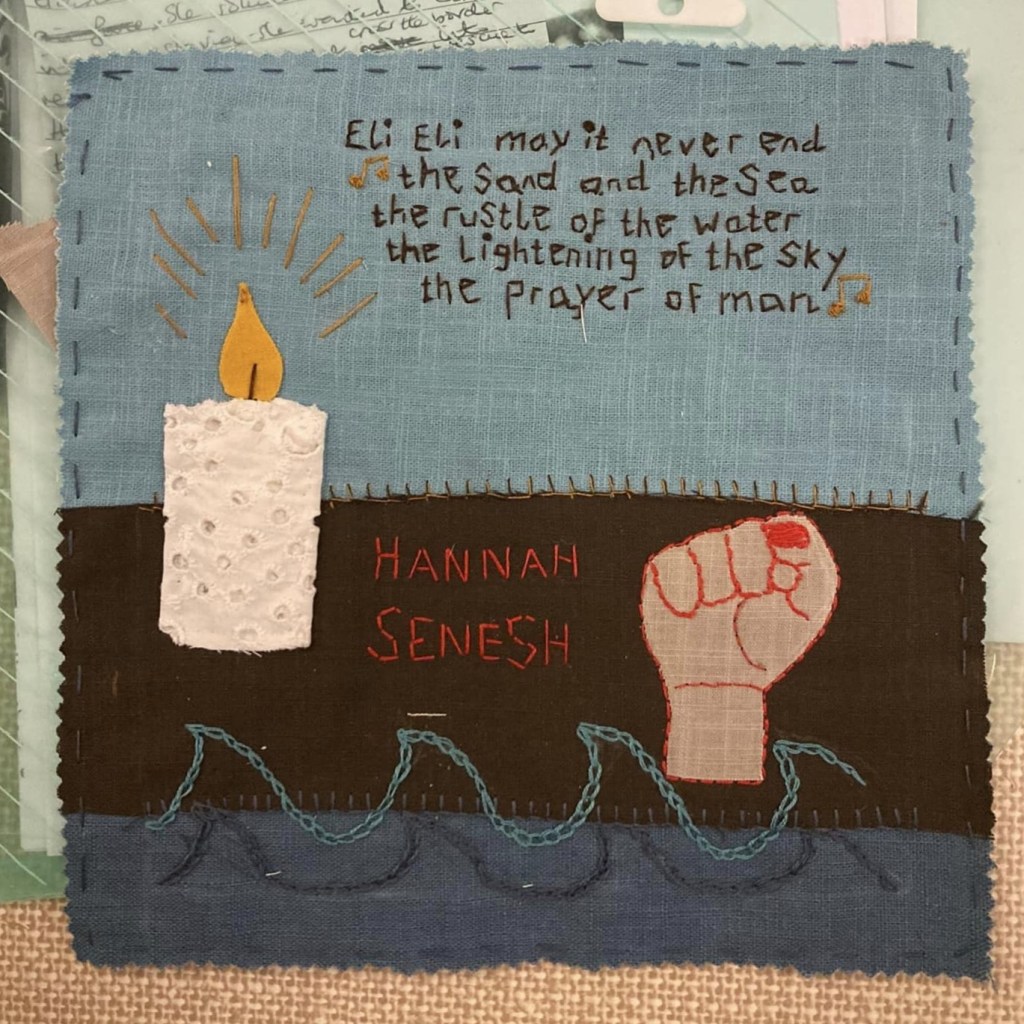
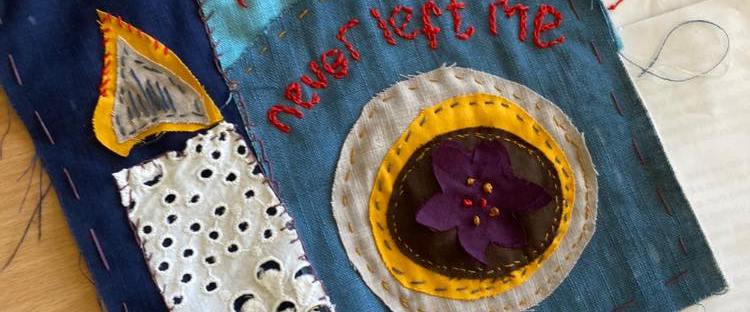
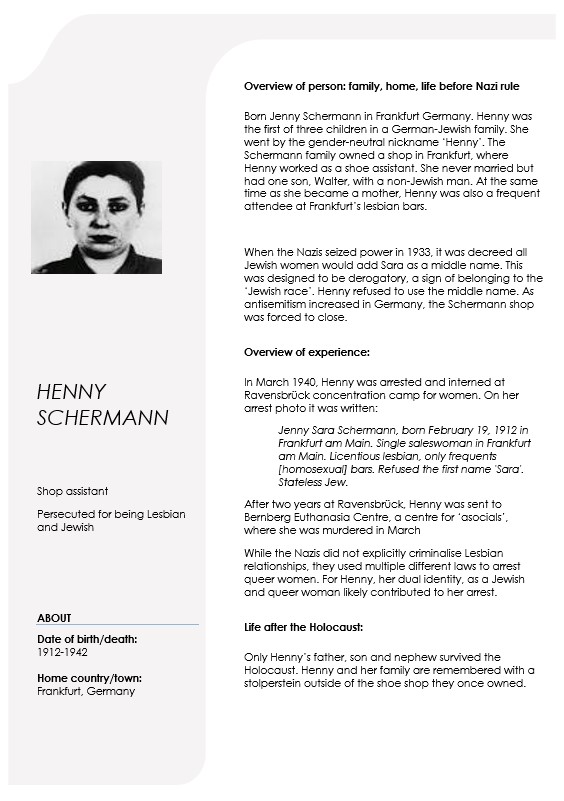
Each square should contain a candle, the name of the individual and in some way share a little of their story. Each square will be supported by a ‘story card’ which further shares details of the person commemorated. During workshops participants will be encouraged to share some of their research with fellow participants. Workshops are free to participate in, donations towards costs of materials and artist time welcome.
Postal Pack: For those wishing to create a commemorative square, but unable to join a workshop, creative packs are available. (Deadline for contributions Friday 22nd November 2024.) Creative packs are free, donations towards material costs welcome.
Sponsorship:to help finance this project supporters are invited to donate £5 in return their name will be stitched onto the back of the quilt. The back of the quilt will contain two quotes from Anne Frank’s Diary of a young Girl “What is done cannot be undone, but one can prevent it happening again.” / “How wonderful it is that nobody need wait a single moment before starting to improve the world.”
This project is kindly being supported by holocaust Memorial Day Trust and The Multi Faith Centre. Further sponsors and supporters are sought.
It is planned that workshops will take place across Derby and Derbyshire. If you are interested in hosting a workshop, sponsorship of taking part either at a workshop or via creative postal pack drop me an email at laura_burrill@outlook.com
Workshop Dates: Places free, booking essential.
Friday 18th October – 10am – 1pm – Multi Faith Centre, Kedleston Road, Derby TICKETS
Sunday 20th October – 1pm – 4pm – Multi Faith Centre, Kedleston Road, Derby TICKETS
Thursday 7th November – 6pm – 8pm – Multi Faith Centre, Kedleston Road, Derby TICKETS
Saturday 9th November – 1pm – 4pm – Multi Faith Centre, Kedleston Road, Derby TICKETS
What is your story and how would you like it to be told? If you could be represented in your local museum, how would you choose to be celebrated? These are the questions being asked and documented in a giant slow stitched patchwork ‘Quilt of Connection’.
Quilts of Connection is a response to Derby Museum & Art Galleries’ exhibition History makers: Unfolded. The exhibition acts as a provocation for conversation, asking the people of Derby to reflecting upon the stories already told within the museum space and importantly what stories are missing and should be told. Through a series of workshops, together with Derby Museums I am inviting the people of Derby and Derbyshire to join us in creating a giant slow stitched patchwork. This work is a chance for individuals to share their personal stories, their journey, their connection and contribution to the area.
What piece of fabric would you choose to represent your story? It could be as simple as a scrap in your favorite colour, a fragment of clothing from an important occasion, an heirloom piece of family history or a scrap of fabric that reminds you of an important memory. Repurposing cherished or unwanted, leftover and discarded textiles I invite participants to incorporate the stories and memories held within cloth to document important personal narratives and express inner voice. The beautiful, tactile objects created then act as a tangible invitation for further conversation, discussion and remembrance.
The process of slow stitching is very simple using the most basic of stitches including running, back and seed stitch. Piece by piece the added fragments of fabric layer to create a collage style textile which will represent the participants as a community.
The collage will be worked onto reclaimed textiles associated with human connection including bed sheets and tablecloths, drawing on the intimacy of the objects, and the stories they contain of love, friendship, family, loss, loneliness, migration and community.
The quilt will be worked in a continuous piece, attaching each next required length of base cloth to the last. Once completed the whole work will be cut up into useable quilts and backed. One will be retained by the museum; the rest will be given to those in the community in need of comfort and support so that they can be wrapped in the shared history of Derby and the warmth of our community connection.
Alongside workshops with organisations including Maison Foo and the Multi-Faith Centre Derby a series of public workshops are planned to take place at the Museum and Art gallery. These are free drop-in sessions. I hope to see you there! Feel free to bring along a fragment of fabric to add to the quilt or enjoy delving into my vast collection of reclaimed and vintage textiles which will be available and free for participants to use.
Upcoming public drop-in workshops:
Derby Museum & Art Gallery – Sunday 28th January 1.30-.30pm
Derby Museum & Art Gallery – Saturday 9th March 1.30-3.30pm
Derby Museum & Art Gallery – Saturday 16th March 1.30 -3.30pm