I’m super excited to announce that 17 Stitching Ashbourne workshops will be taking place over the next two months at venues all across town!
From cafés to tap rooms, community spaces to church halls, Ashbourne is opening its doors, and its heart, to this creative new project. A huge thank you to House of Beer, Sticky Fingers, Cornerstone Café, Ashbourne Methodist Church’s Craft & Chat Group, and Ashbourne Town Hall for so generously hosting and supporting us.
We’ve been blown away by the enthusiasm from businesses and groups across Ashbourne. Offers of workshop space, funding, and practical help have shown us just how much this town loves to come together.
How You Can Get Involved
There are still plenty of ways to join in and help shape this vibrant community artwork:
Shape the design What places in Ashbourne matter most to you? Which buildings should be celebrated in our textile artwork? Share your thoughts in our short survey here: Take the survey →
Attend a workshop Drop in to one of our free, friendly sessions and try your hand at creating an embroidered appliqué square. No sewing experience needed, just bring your ideas and creativity. Workshop details here
Support the project financially Thanks to a generous seed grant of £564 from Ashbourne Methodist Church, we’ve made a great start, but we’re now seeking additional funding to complete the project. If you’re a local business, funder, or individual who’d like to get involved, we’d love to collaborate. You can also support us directly via our crowdfunding page →.
Donate refreshments Help us keep the tea and creativity flowing! We’re looking for supplies of tea, coffee, biscuits, long-life milk, sugar, and paper cups for our workshops.
Donate fabric Got fabric scraps in terracotta, stone, rust, blues, or sage greens? Every piece, big or small, will find its place in our textile story.
To donate refreshments, fabric, or to discuss funding support, please contact Laura at laura_Burrill@outlook.com.
This is more than just a project, it’s a celebration of Ashbourne’s people, places, and spirit. Whether you stitch, support, or simply share your stories, we’d love you to be part of it. Together, we’ll stitch Ashbourne’s story into something truly special.
Last week I launched a brand-new creative adventure: Stitching Ashbourne!
Stitching Ashbourne is a community-led textile art project that invites people of all ages across Ashbourne to come together and help create a large-scale appliqué and embroidered artwork. At its heart, it’s about more than fabric and thread – it’s about celebrating what makes Ashbourne special, together.
Thanks to the support of Ashbourne Methodist Church and a wonderful team of volunteers, the project is already brimming with energy and enthusiasm. My hope is that everyone in Ashbourne will feel able to get involved, from experienced stitchers to those who have never sewn a single button, everyone is invited to be part of this creative journey.
The vision:
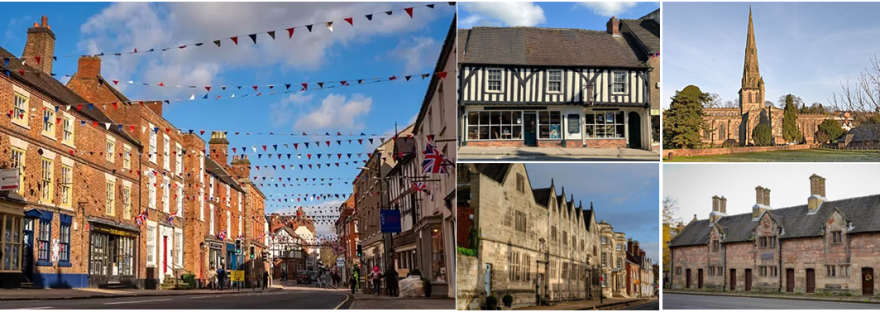
Over the next few months, we’ll be working towards creating a 2-metre-square artwork featuring some of Ashbourne’s most loved landmarks – from St Oswald’s Church to Queen Elizabeth’s Grammar School, via the Gingerbread Café and the beautifully refurbished Market Square.
Surrounding a centerpiece will be over 100 individually stitched squares, each created by local residents, schools, and community groups. Every square will tell its own story – a memory, a personal connection, or a celebration of what Ashbourne means to them.
Why Stitching Ashbourne matters:
Stitching Ashbourne is about more than the finished artwork. It’s about:
Celebrating our local heritage and what makes Ashbourne unique.
Bringing people together through creative workshops and shared stories.
Encouraging creativity and showing that anyone can take part, no sewing skills required.
Reigniting local pride in the place we call home.
The first steps:
I’ve been blown away by the enthusiasm, kindness, and creativity pouring in already. Here are some of the exciting things underway:
Workshops are already booking up! Year 6 students from St Oswald’s Primary School will be stitching their story with a workshop being held in October. QEGS, House of Beer, and U3A are also on board, with Ashbourne Creative Stitchers and the Craft & Chat group keen to join too. The Methodist Church will also be hosting drop-in workshops – details to follow.
Media buzz! I was interviewed on BBC Radio Derby last week, which aired over the weekend. The project has been warmly received on social media too, and press releases have been shared with the local papers.
Venues & display plans – Ashbourne Town Hall have already asked to host the artwork once it’s complete, which is so exciting!
Community support – Donations have started coming in through our crowdfunding page, and local business Curtains Up have kindly offered fabrics. I’m also thrilled to have a local amateur historian joining the planning team.
Word is spreading fast and the project is gathering real momentum. What began as a simple idea is quickly growing into something bigger, shaped by the enthusiasm and creativity of those already involved. It’s wonderful to see it capture people’s imagination – and I know many more will want to join as we go.
How you can join in
There are so many ways you can be part of Stitching Ashbourne:
Come along to a workshop – all materials are provided, and no experience is needed. Dates will be released soon. In the meantime, email me to have your name added to the workshop mailing list. Schools and groups – if you’d like to host a session, I’d love to chat. Venues – if you have a café, pub, or community space that could host a creative session, please get in touch. Shape the design – tell us which landmarks feel special to you by filling in this short survey. Support financially – every little helps us make this vision a reality. Donations can be made via our crowdfunding page.
Be part of the story!! This project is already inspiring people across Ashbourne and I’d love you to be part of it too. Whether you stitch, host, or support, every contribution matters. To get involved drop me a message at laura_burrill@outlook.com
Stitching Wartime Resilience into Peace Celebrations
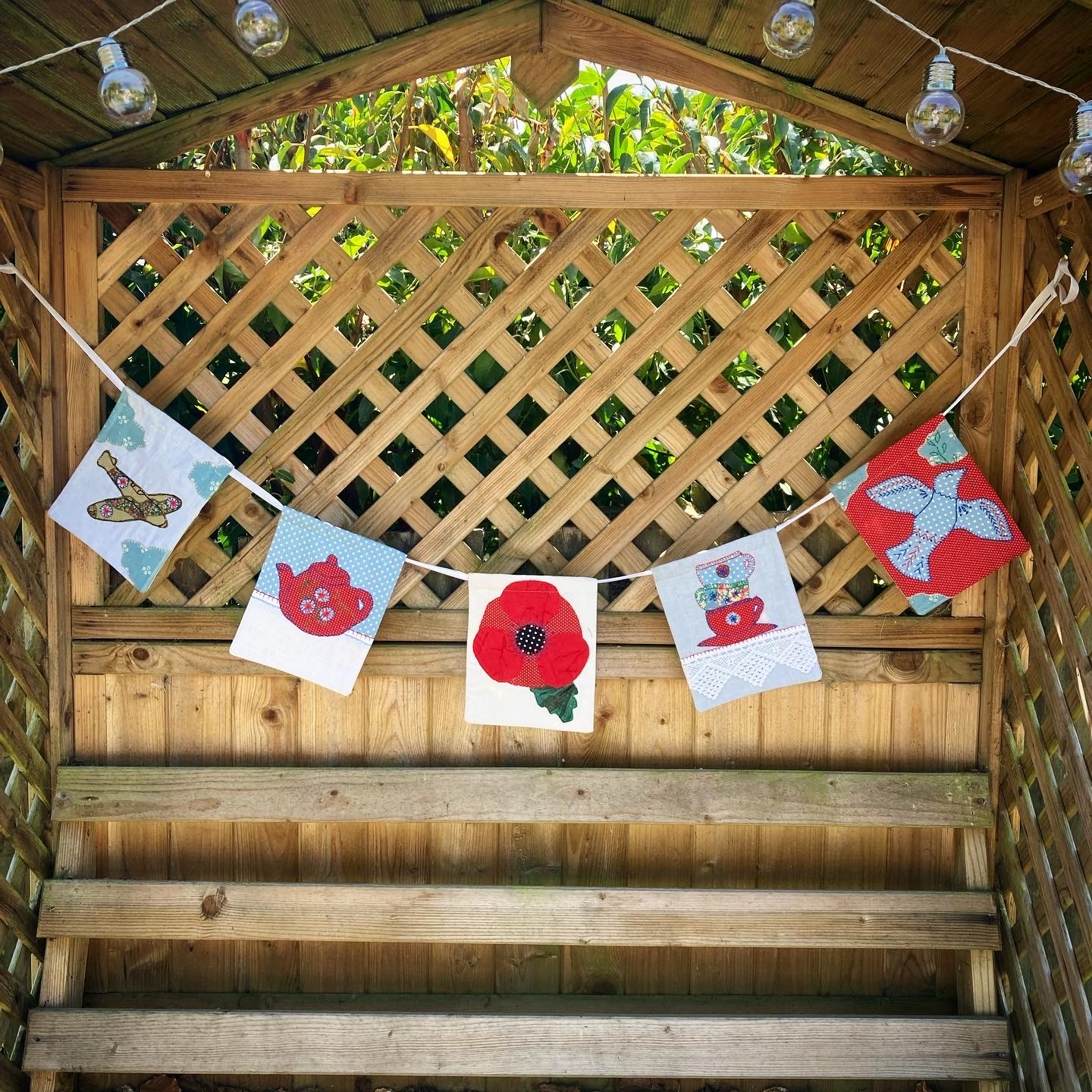
I’m super excited to share that this summer, I’ll be in residence at Erewash Museum, leading an ambitious community project to create 50 meters of bunting to commemorate VE and VJ Day.
Throughout August 2025, I’ll be based at the museum, inviting local residents and visitors to join me at drop-in workshops to make bunting inspired by the spirit of wartime celebrations. Rooted in the 1940s ethos of “make do and mend,” we’ll be working with reclaimed, vintage, and recycled fabrics in red, white, and blue. As always I’m on the lookout for fabrics so please contact me if you have cotton fabrics you’d like to donate.)
During the workshops, we’ll reflect on how we mark peace, joy, and community, then and now, asking questions like:
What does celebration mean to you?
How did past generations mark the end of war?
How do we celebrate peace today?
Whether you’re a confident stitcher or have never picked up a needle, there’s something for everyone:
Rag Bunting – A no-sew activity that’s perfect for children, families, or anyone looking for a quick and creative way to contribute.
Embroidered Bunting – A slower, more detailed experience using hand embroidery and appliqué. These guided, drop-in sessions welcome participants of all abilities.
The completed bunting will make its debut at the War Time Variety Show on Friday, 29th August 2025, with a section featured in the upcoming “From Gas Masks to Garden Parties” exhibition opening in September.
Designed to be reused and re-shared, you can expect to see the bunting appear at various museum events for years to come — a lasting symbol of community, creativity, and sustainable making.
To get the ball rolling, I’ve stitched the very first meter of bunting — just 49 to go! I hope you’ll join me in this ambitious creative adventure. Every flag added is a piece of our shared story, stitched with memory, imagination, and hope.
Workshop dates and times will be announced soon, so watch this space!
Trying to pick just one person to represent in a quilt in memorial to those affected by the Holocaust is daunting. As a champion for telling stories through the creation of textiles I knew I wanted to honor a fellow ‘sewist’, someone who had stitched something whilst in a concentration camp.
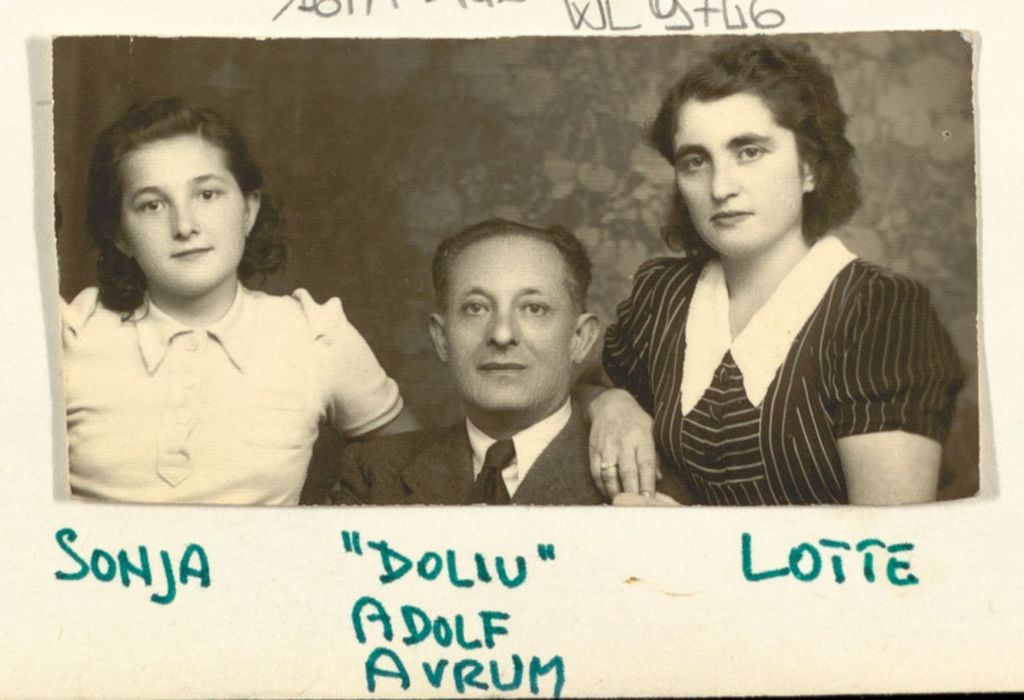
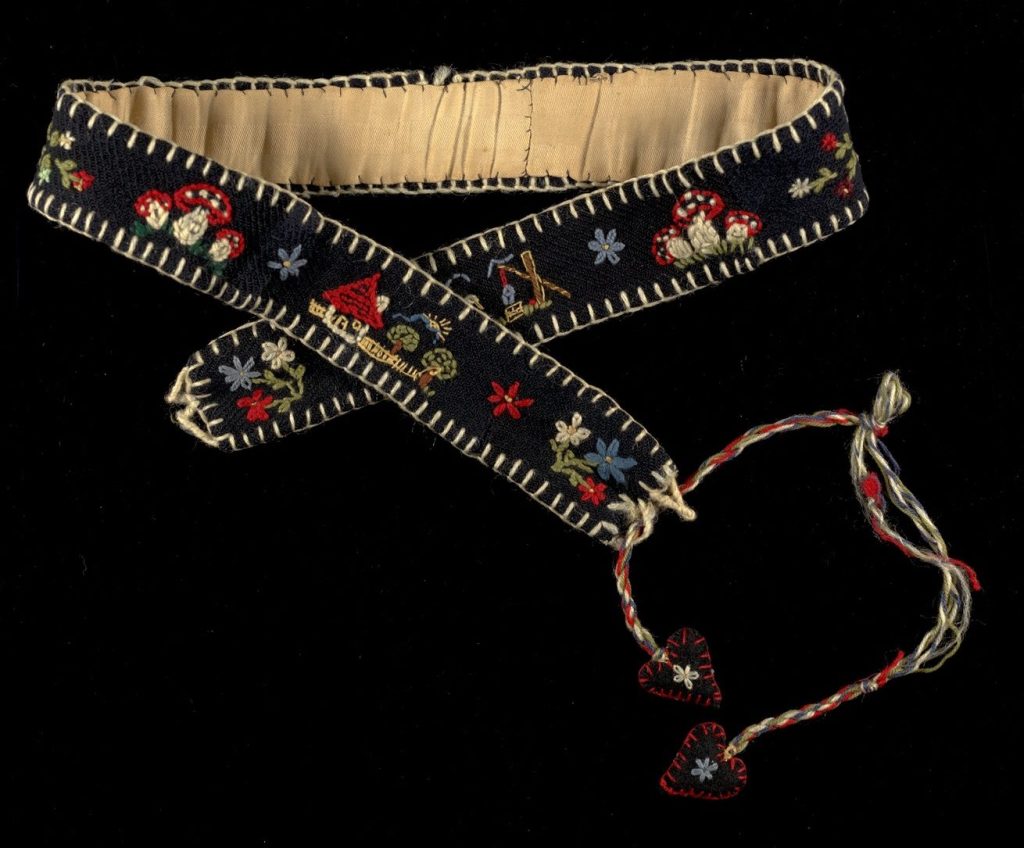
Meet Sonja Jaslowitz, a young German speaking, Jewish Romanian girl whose creative talent lives on through her poetry and embroidered belt.
Sonja’s story…
On 4th June 1942, Sonja Jaslowitz, together with her German speaking Jewish parents, Lotte and Adolf Jaslowitz, were deported to Cariera de Piatra Concentration and Camp.[1]
Sonja was just 15 years old. She left behind her home, a first floor flat owned by her grandmother, in the bustling town of Czernowitz, Romania. [2] Czernowitz had a large Jewish community, but as fascism rose in popularity across Romania, antisemitism increased. [3] Between 1941 and 1944 approximately three hundred thousand Jews and Roma perished in the Romanian administered region.[4]
Sonja and her family were sent eastward to a region that came to be known as Transnistria. Transnistria was a ‘holding’ or ‘containment’ place for deported Jews, a ‘dumping ground’ to await mass transfer across the Bug River.[5] The family spent time in the makeshift Cariera de Piatra concentration camp. Once a granite rock quarry, inmates found ‘shelter in wrecked guard and storage sheds that had been built partially into the rock’. [6] More than five hundred people were crammed into wooden barracks built to accommodate just eighteen. [7] From here they were sent to Obodovka Concentration Camp and then onto the Tiraspol ghetto. With limited documentation we can only imagine how Sonja and her parents managed to survive the brutal environment. Together they would have faced deprivation, starvation, dehydration and bitterly cold temperatures.
Amongst all this horror Sonja chose to create, and perhaps more remarkably some of her creations survived. These surviving acts of resistance include a black blanket-stitched belt embroidered with whimsical flowers, mushrooms and quaint scenes of houses with picket fences, trees, fluffy clouds and sunshine; and a body of poetry written in German, Romanian and French. Composed in the camps and ghettos of Transnistria her poetry gives us a glimpse of the girl she was, thoughtful, observant, resourceful, sarcastic, courageous, defiant.
Using simple verses and metaphorical phrases Sonja conveys her deeply felt emotional state of pain and longing whilst painting a picture of her surroundings. She gives agency to hope, nurturing her confidence and mental energy in order to survive.
Sonja and her parents were liberated in 1944 and repatriated to the Romanian capital, Bucharest. Here she typed an illustrated some of her poems. Sadly, she was killed during the shelling of Bucharest, April 1944. Collateral damage victim of shrapnel from Allied bombs intended for German-controlled oil installation near Romanian capital.[10] Sonja’s father died shortly afterwards having contracted tuberculosis in the ghetto. Her mother moved to England, bringing with her Sonja’s creative works.
How would Sonja feel about her work being shared? Did she create privately for herself or intentionally to share her story? Was she determined to document her experience, exercising her own limited agency within the confines of Nazi rule, or simply filling time?
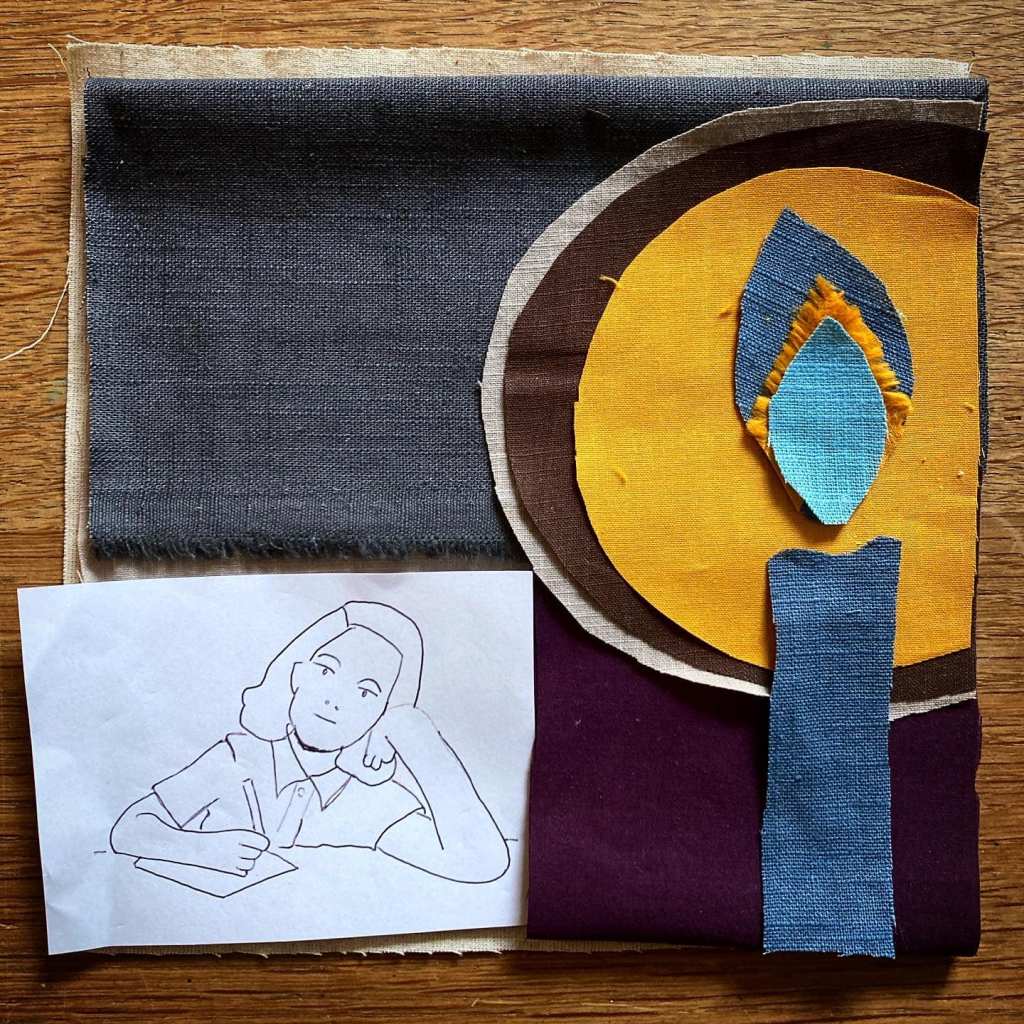
There is a vulnerability in creating and being creative, works set free into the world can easily be dismissed, ignored, criticized or misunderstood. But there is also power in creating art; the power to tell a story and share ones inner most self for others to see. It provides space to contemplate and regulate emotion and room for play and experimentation. Sonja’s embroidered belt is what drew me to find out more about her, I was sure an object of such whimsy and beauty created in such horror had a story to tell. I wonder what Sonja would think of the square I am dedicating to her?
Square one, work in progress. ‘Remembering Sonja Jaslowitz’, Laura Burrill, linen on calico.
[5] Hirsch, K, Spitzer, L, ‘Small Acts of Repair: The Unclaimed Legacy of the Romanian Holocaust’, Journal of Literature and Trauma Studies, Volume 4, No 1-2, Spring/Fall, 2015 p.13-42p25
[6] Hirsch, K, Spitzer, L, ‘Small Acts of Repair: The Unclaimed Legacy of the Romanian Holocaust’, Journal of Literature and Trauma Studies, Volume 4, No 1-2, Spring/Fall, 2015 p.13-42P.27
[9] From poem ‘Longing’, S. Jaslowitz (Translated) Hirsch, K, Spitzer, L, ‘Small Acts of Repair: The Unclaimed Legacy of the Romanian Holocaust’, Journal of Literature and Trauma Studies, Volume 4, No 1-2, Spring/Fall, 2015 p.13-42, p.29.
[10] Hirsch, K, Spitzer, L, ‘Small Acts of Repair: The Unclaimed Legacy of the Romanian Holocaust’, Journal of Literature and Trauma Studies, Volume 4, No 1-2, Spring/Fall, 2015 p.13-42, p.14.



 Every Stitch A Story