Blog

Beginning at square one

Trying to pick just one person to represent in a quilt in memorial to those affected by the Holocaust is daunting. As a champion for telling stories through the creation of textiles I knew I wanted to honor a fellow ‘sewist’, someone who had stitched something whilst in a concentration camp.

Meet Sonja Jaslowitz, a young German speaking, Jewish Romanian girl whose creative talent lives on through her poetry and embroidered belt.

Sonja’s story…

On 4th June 1942, Sonja Jaslowitz, together with her German speaking Jewish parents, Lotte and Adolf Jaslowitz, were deported to Cariera de Piatra Concentration and Camp.[1]
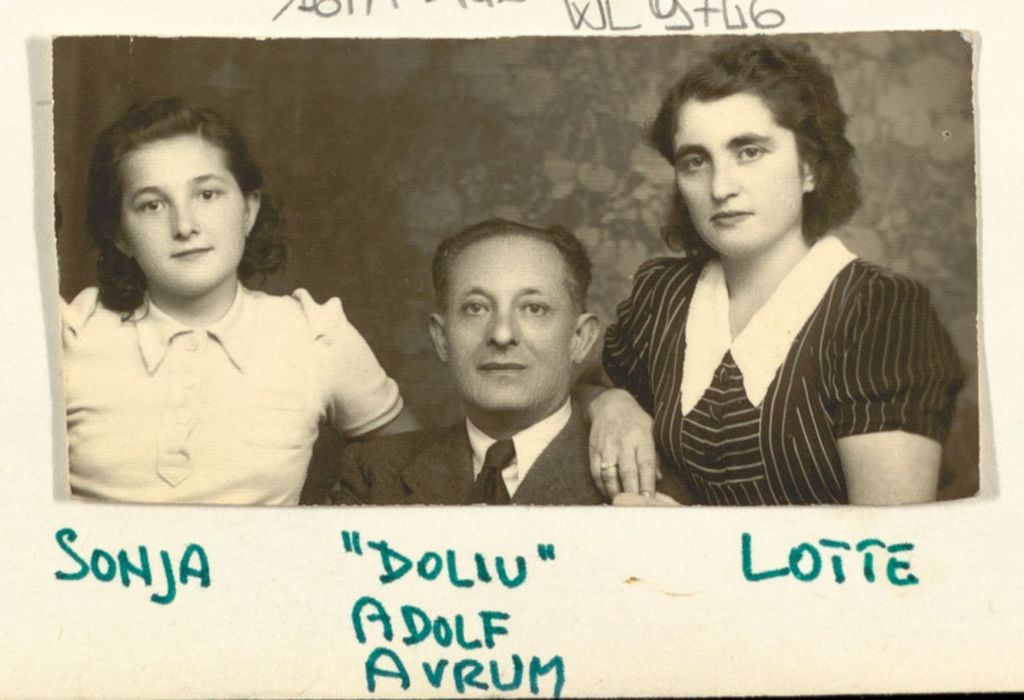
Sonja, Adolph and Lotte Jaslowitz, c1939. ©Wiener Holocaust Library

Sonja was just 15 years old. She left behind her home, a first floor flat owned by her grandmother, in the bustling town of Czernowitz, Romania. [2] Czernowitz had a large Jewish community, but as fascism rose in popularity across Romania, antisemitism increased. [3] Between 1941 and 1944 approximately three hundred thousand Jews and Roma perished in the Romanian administered region.[4] 

Sonja and her family were sent eastward to a region that came to be known as Transnistria. Transnistria was a ‘holding’ or ‘containment’ place for deported Jews, a ‘dumping ground’ to await mass transfer across the Bug River.[5] The family spent time in the makeshift Cariera de Piatra concentration camp. Once a granite rock quarry, inmates found ‘shelter in wrecked guard and storage sheds that had been built partially into the rock’. [6] More than five hundred people were crammed into wooden barracks built to accommodate just eighteen. [7] From here they were sent to Obodovka Concentration Camp and then onto the Tiraspol ghetto. With limited documentation we can only imagine how Sonja and her parents managed to survive the brutal environment. Together they would have faced deprivation, starvation, dehydration and bitterly cold temperatures.

Amongst all this horror Sonja chose to create, and perhaps more remarkably some of her creations survived. These surviving acts of resistance include a black blanket-stitched belt embroidered with whimsical flowers, mushrooms and quaint scenes of houses with picket fences, trees, fluffy clouds and sunshine; and a body of poetry written in German, Romanian and French. Composed in the camps and ghettos of Transnistria her poetry gives us a glimpse of the girl she was, thoughtful, observant, resourceful, sarcastic, courageous, defiant.
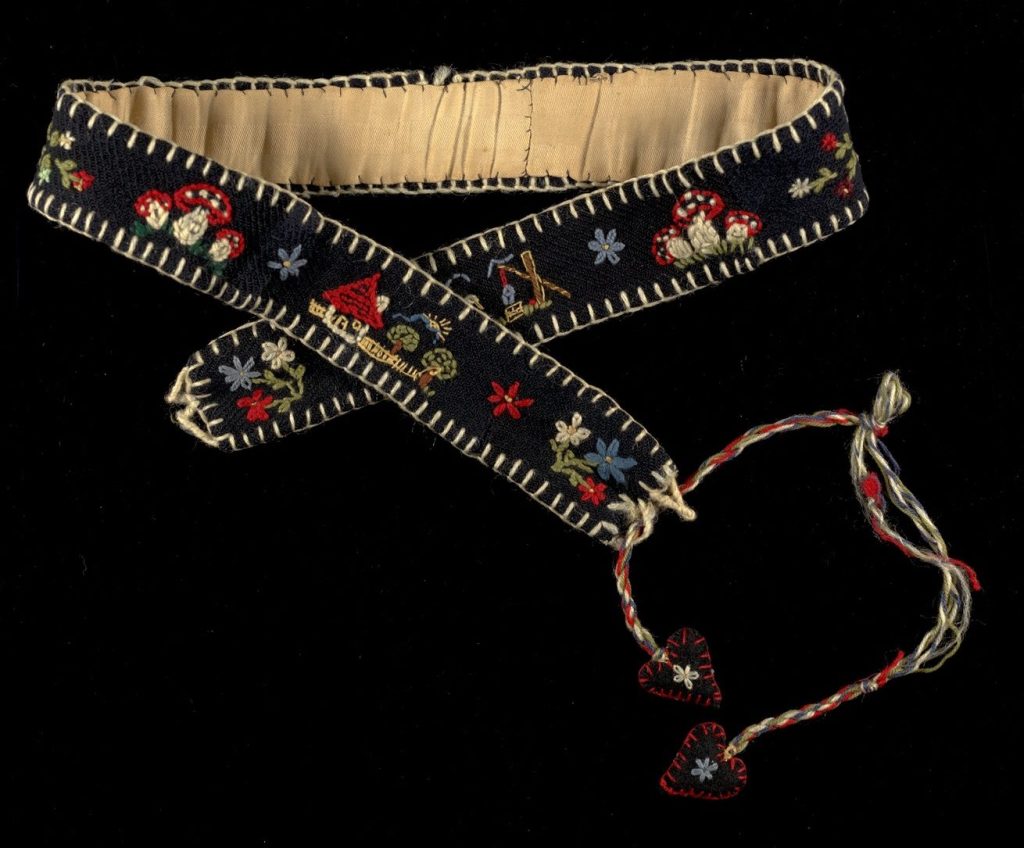
Embroidered belt, created by Sonia Jaslowitz [8]

Using simple verses and metaphorical phrases Sonja conveys her deeply felt emotional state of pain and longing whilst painting a picture of her surroundings. She gives agency to hope, nurturing her confidence and mental energy in order to survive.  

‘…But far away in this grey distance –

A flickering redemption waves

A flame of hope lights up

Compelling us to strength

And with a powerful

Voice, it calls

Endure your cruel lot,

The darkest hour

Always precedes the dawn.’ [9]

Sonja and her parents were liberated in 1944 and repatriated to the Romanian capital, Bucharest. Here she typed an illustrated some of her poems. Sadly, she was killed during the shelling of Bucharest, April 1944. Collateral damage victim of shrapnel from Allied bombs intended for German-controlled oil installation near Romanian capital.[10] Sonja’s father died shortly afterwards having contracted tuberculosis in the ghetto. Her mother moved to England, bringing with her Sonja’s creative works.

 How would Sonja feel about her work being shared? Did she create privately for herself or intentionally to share her story? Was she determined to document her experience, exercising her own limited agency within the confines of Nazi rule, or simply filling time?

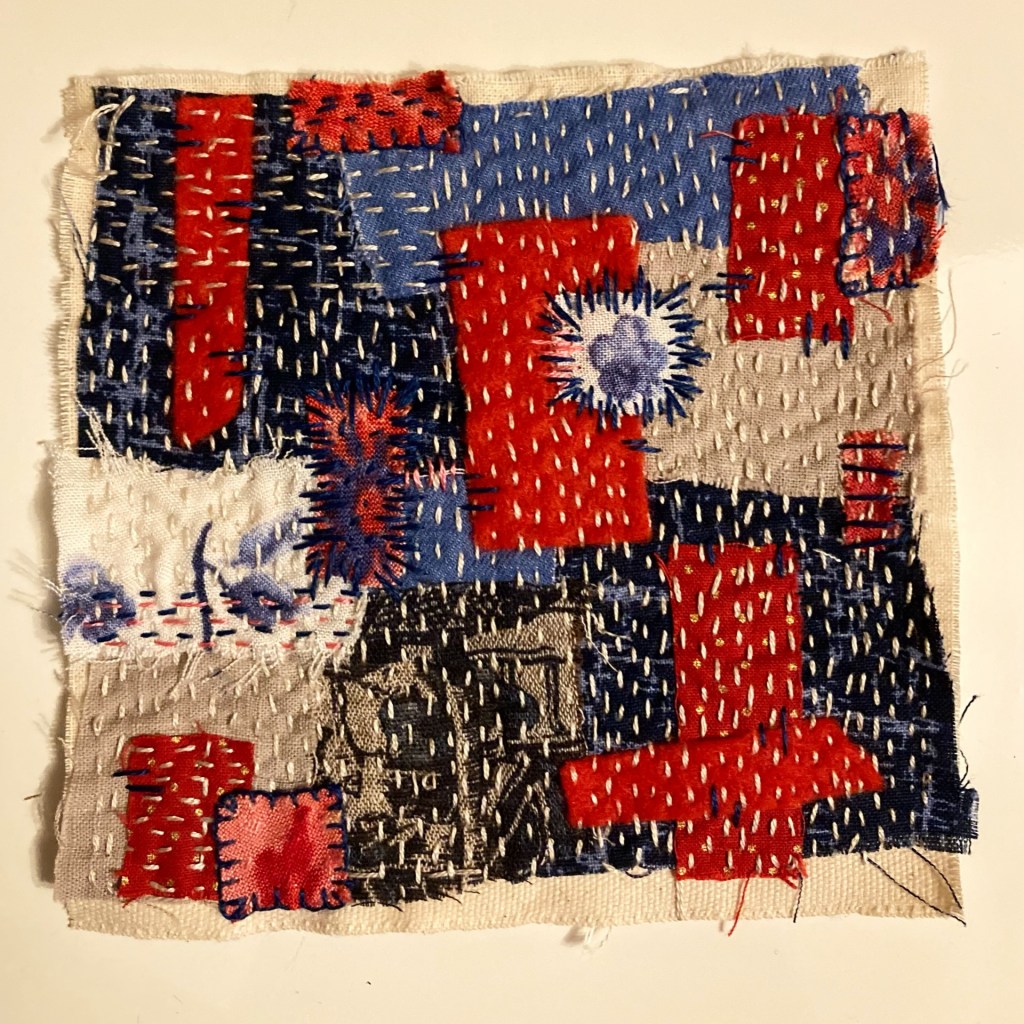
There is a vulnerability in creating and being creative, works set free into the world can easily be dismissed, ignored, criticized or misunderstood. But there is also power in creating art; the power to tell a story and share ones inner most self for others to see. It provides space to contemplate and regulate emotion and room for play and experimentation. Sonja’s embroidered belt is what drew me to find out more about her, I was sure an object of such whimsy and beauty created in such horror had a story to tell. I wonder what Sonja would think of the square I am dedicating to her?
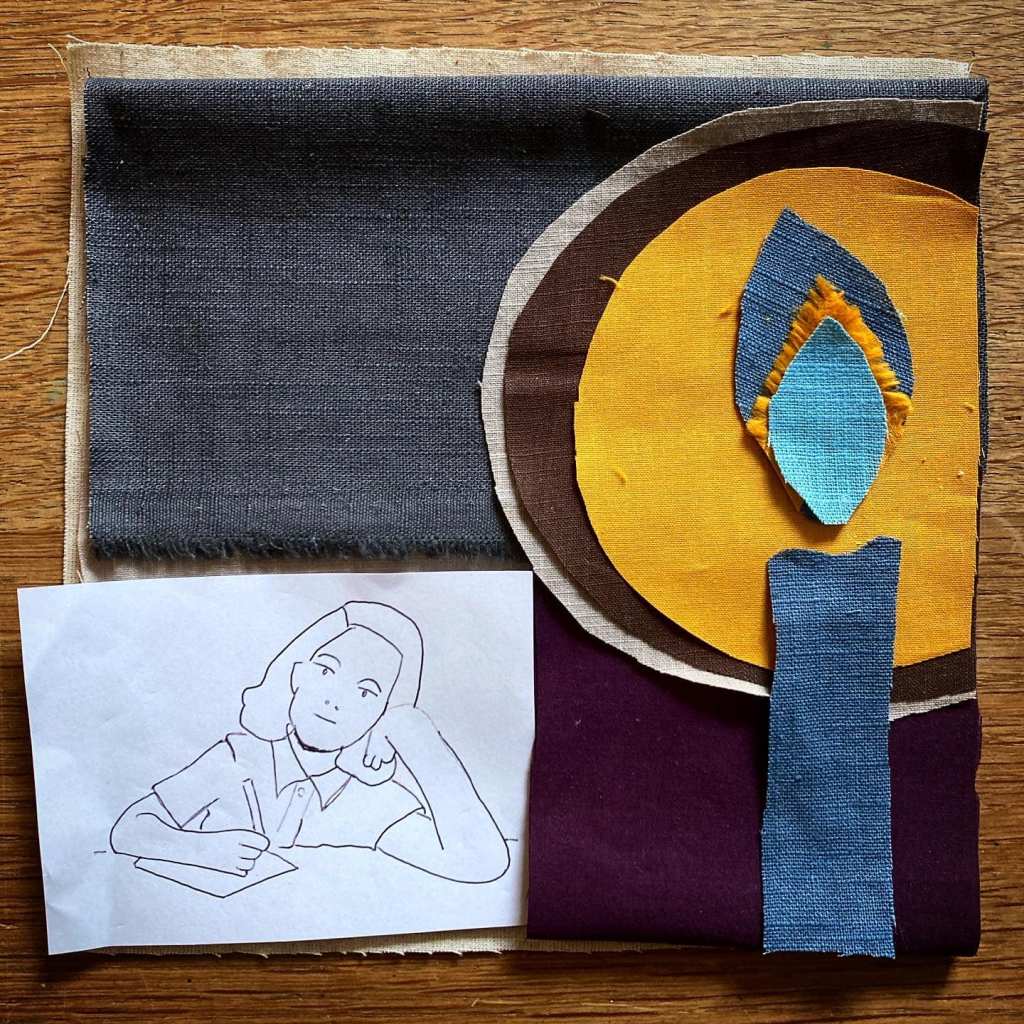
Square one, work in progress. ‘Remembering Sonja Jaslowitz’, Laura Burrill, linen on calico.

Bibliography

Hirsch, K, Spitzer, L, ‘Small Acts of Repair: The Unclaimed Legacy of the Romanian Holocaust’, Journal of Literature and Trauma Studies, Volume 4, No 1-2, Spring/Fall, 2015 p.13-42 Available online: (PDF) Small Acts of Repair: The Unclaimed Legacy of the Romanian Holocaust (researchgate.net)

Jarvis, H. The Writings, Documents and Photographs of Herschl Jaslowitz (Dr. Harry Jarvis) Available online: harryjarvis (ehpes.com)

The Weiner Holocaust Library, The Holocaust Explained, https://www.theholocaustexplained.org/

Yad Vashem, The World holocaust remembrance centre, Search Sonja Yaslowitz. Available online: Yad Vashem Collections – Documents – Search Results


[1] Cariera de Piatra is also referred to as Ladijin Concentration Camp. The Weiner Holocaust Library, The Holocaust Explained, Ladijin Concentration Camp (nd) Available online:  Ladijin Concentration Camp – The Holocaust Explained: Designed for schools Date Accessed: 14.09.24

[2] The Writings, Documents and Photographs of Herschl Jaslowitz (Dr. Harry Jarvis)Available online: https://czernowitz.ehpes.com/stories/jarvis/harryjarvis.html, Date Accessed: 14.09.24; Lotte Jaslowitz – The Holocaust Explained: Designed for schools, Available online:  https://www.theholocaustexplained.org/survival-and-legacy/life-after-the-holocaust/lotte-jaslowitz/ Date Accessed 19.09.24

[3] Lotte Jaslowitz – The Holocaust Explained: Designed for schools, Available online:  https://www.theholocaustexplained.org/survival-and-legacy/life-after-the-holocaust/lotte-jaslowitz/

[4] Hirsch, K, Spitzer, L, ‘Small Acts of Repair: The Unclaimed Legacy of the Romanian Holocaust’, Journal of Literature and Trauma Studies, Volume 4, No 1-2, Spring/Fall, 2015 p.13-42

[5] Hirsch, K, Spitzer, L, ‘Small Acts of Repair: The Unclaimed Legacy of the Romanian Holocaust’, Journal of Literature and Trauma Studies, Volume 4, No 1-2, Spring/Fall, 2015 p.13-42p25

[6] Hirsch, K, Spitzer, L, ‘Small Acts of Repair: The Unclaimed Legacy of the Romanian Holocaust’, Journal of Literature and Trauma Studies, Volume 4, No 1-2, Spring/Fall, 2015 p.13-42P.27

[7] The Weiner Holocaust Library, The Holocaust Explained, Ladijin Concentration Camp (nd) Available online:  Ladijin Concentration Camp – The Holocaust Explained: Designed for schools Date Accessed: 14.09.24

[8] Jaslowitz, S., Embroidered belt, c1942-4. Available online: https://wienerholocaustlibrary.org/object/1617-13/ Date accessed: 16.09.24

[9] From poem ‘Longing’, S. Jaslowitz (Translated) Hirsch, K, Spitzer, L, ‘Small Acts of Repair: The Unclaimed Legacy of the Romanian Holocaust’, Journal of Literature and Trauma Studies, Volume 4, No 1-2, Spring/Fall, 2015 p.13-42, p.29.

[10] Hirsch, K, Spitzer, L, ‘Small Acts of Repair: The Unclaimed Legacy of the Romanian Holocaust’, Journal of Literature and Trauma Studies, Volume 4, No 1-2, Spring/Fall, 2015 p.13-42, p.14.

NEW PROJECT: Holocaust Memorial Day – 80 Candles Quilt

2025 marks the 80th anniversary of the liberation of Auschwitz-Birkenau. I invite you join me to learn about those affected by the Holocaust and create a slow stitch patchwork memory quilt. Inspired by Holocaust Memorial Day Trusts‘ 2025 theme, the quilt will depict 80 candles, each candle will represent an individual affected by the holocaust and their story.

Participants will research and connect with real human stories of persecution, loss and survival which they will then share by creating a slow stitched square representing an individual’s story.

Holocaust Memorial Day is held on 27th January each year to remember the 6 million Jews murdered during the Holocaust, alongside the millions of people murdered under Nazi persecution of other groups and during more recent genocide in Cambodia, Rwanda, Bosnia and Darfur. (The 27th of January marks the anniversary of the liberation of Auschwitz-Birkenau, the largest Nazi death camp.)

Participants and supporters can take part in numerous ways:

Guided workshop: Through fully facilitated workshops participants will be guided in the process of crafting their own slow stitched embroidered square inspired by their research into an individual affected by the Holocaust or genocide.

Each square should contain a candle, the name of the individual and in some way share a little of their story.  Each square will be supported by a ‘story card’ which further shares details of the person commemorated. During workshops participants will be encouraged to share some of their research with fellow participants. Workshops are free to participate in, donations towards costs of materials and artist time welcome.

Postal Pack: For those wishing to create a commemorative square, but unable to join a workshop, creative packs are available. (Deadline for contributions Friday 22nd November 2024.) Creative packs are free, donations towards material costs welcome.

Sponsorship: to help finance this project supporters are invited to donate £5 in return their name will be stitched onto the back of the quilt. The back of the quilt will contain two quotes from Anne Frank’s Diary of a young Girl “What is done cannot be undone, but one can prevent it happening again.” / “How wonderful it is that nobody need wait a single moment before starting to improve the world.”

This project is kindly being supported by holocaust Memorial Day Trust and The Multi Faith Centre. Further sponsors and supporters are sought.

It is planned that workshops will take place across Derby and Derbyshire. If you are interested in hosting a workshop, sponsorship of taking part either at a workshop or via creative postal pack drop me an email at laura_burrill@outlook.com

Workshop Dates: Places free, booking essential.

Friday 18th October – 10am – 1pm – Multi Faith Centre, Kedleston Road, Derby TICKETS

Sunday 20th October – 1pm – 4pm – Multi Faith Centre, Kedleston Road, Derby TICKETS

Thursday 7th November – 6pm – 8pm – Multi Faith Centre, Kedleston Road, Derby TICKETS

Saturday 9th November – 1pm – 4pm – Multi Faith Centre, Kedleston Road, Derby TICKETS

Quilts of Connection

What is your story and how would you like it to be told? If you could be
represented in your local museum, how would you choose to be celebrated? These
are the questions being asked and documented in a giant slow stitched patchwork
‘Quilt of Connection’.

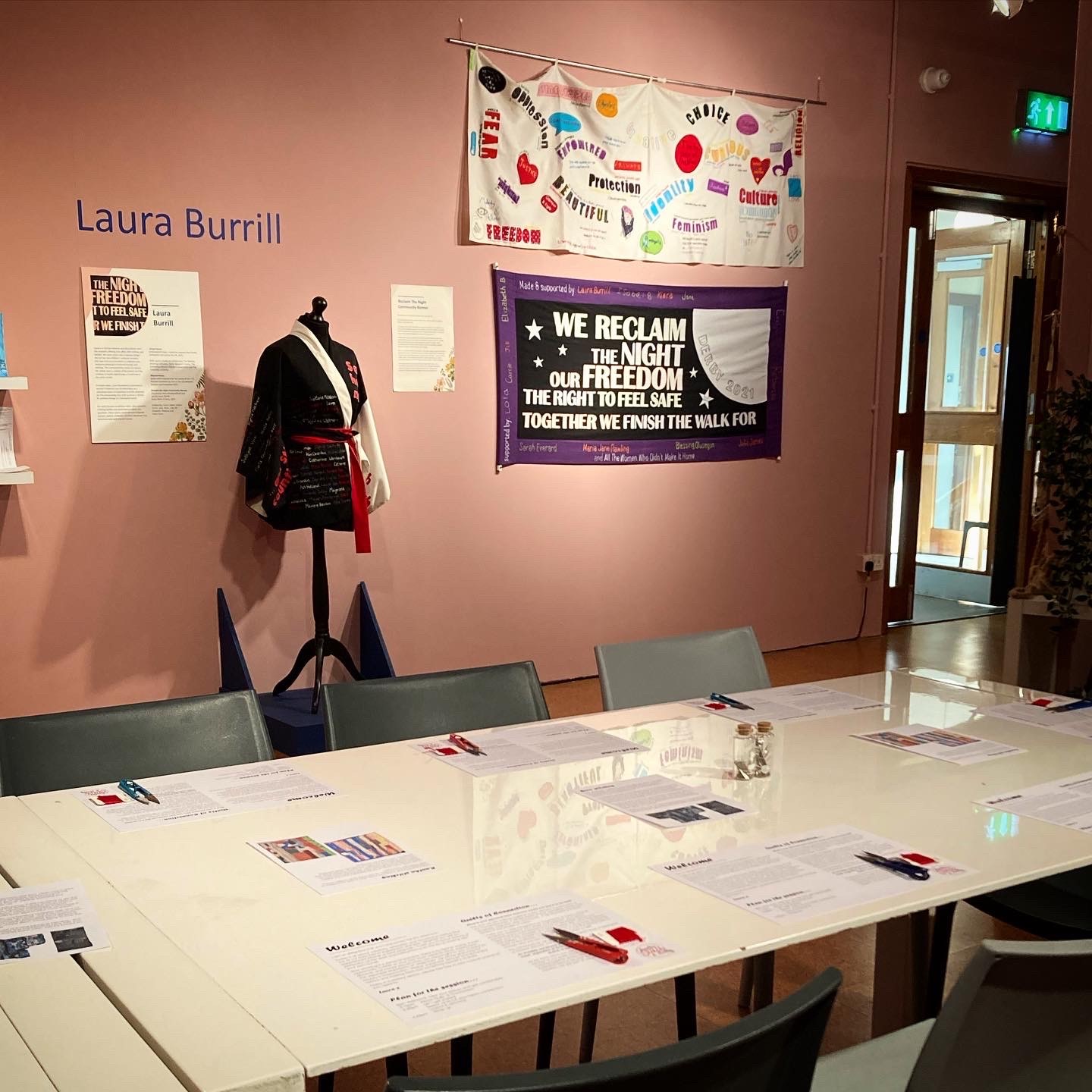
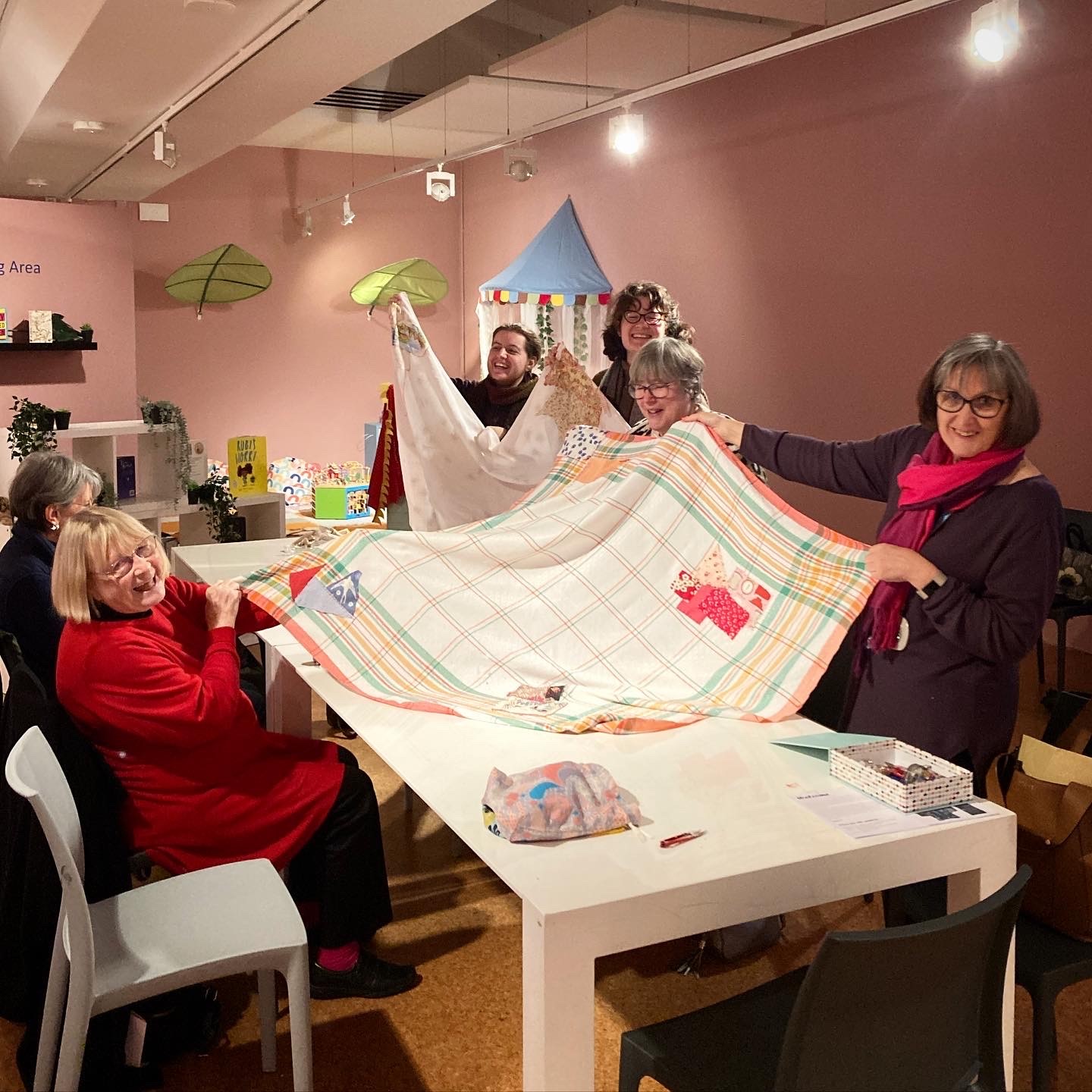
Quilts of Connection is a response to Derby Museum & Art Galleries’ exhibition History makers: Unfolded. The exhibition acts as a provocation for conversation, asking the people of Derby to reflecting upon the stories already told within the museum space and importantly what stories are missing and should be told. Through a series of workshops, together with Derby Museums I am inviting the people of Derby and Derbyshire to join us in creating a giant slow stitched patchwork. This work is a chance for individuals to share their personal stories, their journey, their connection and contribution to the area.

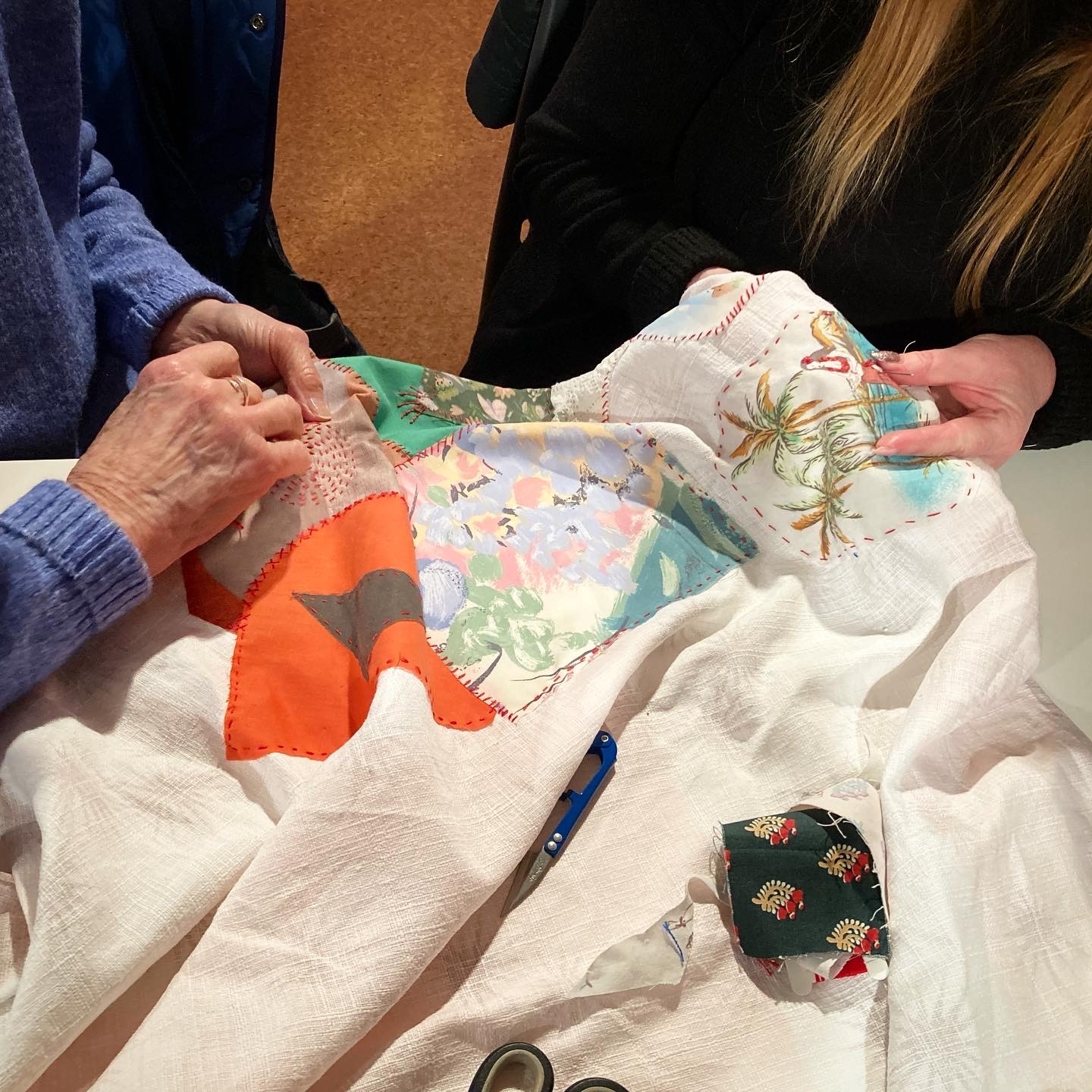
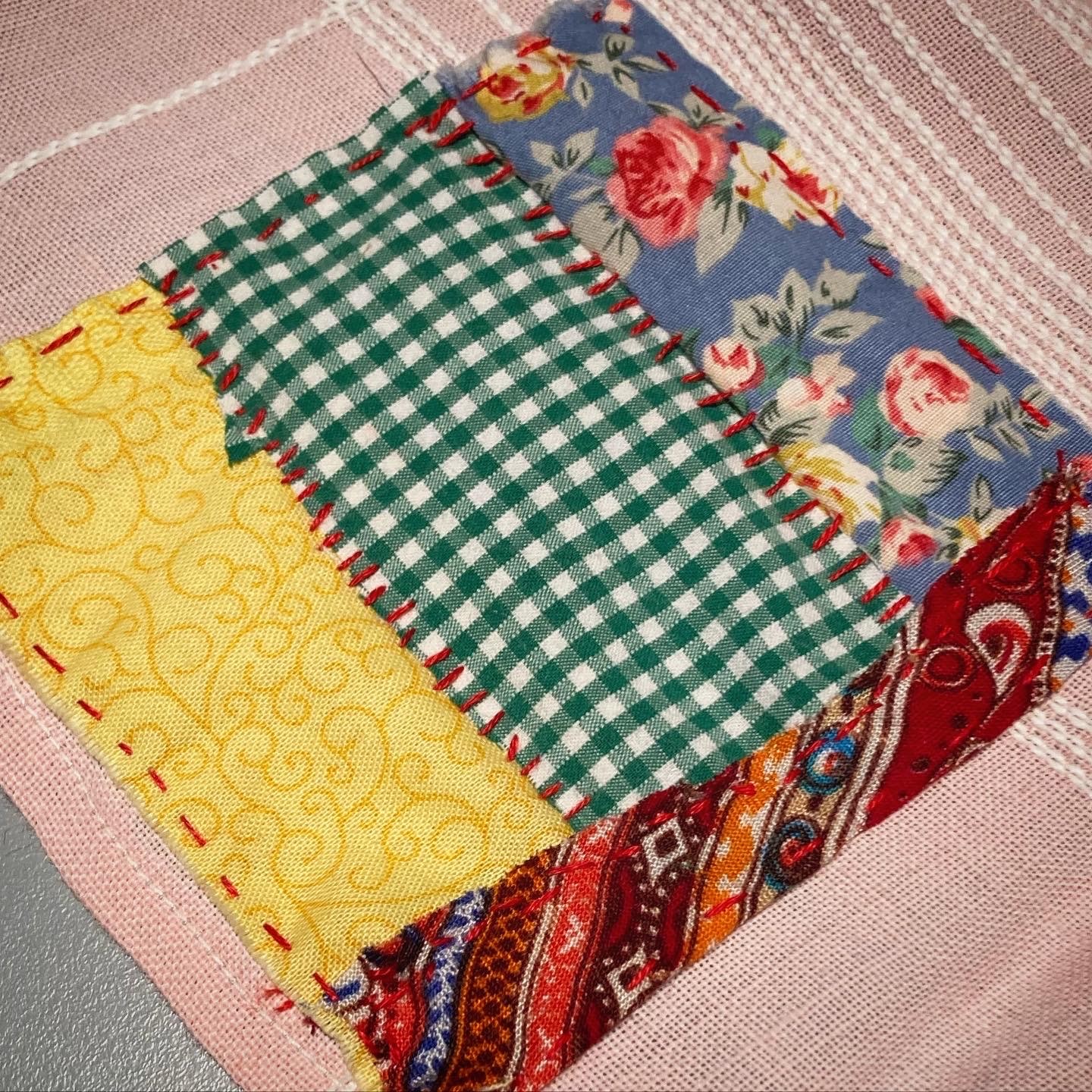
What piece of fabric would you choose to represent your story? It could be as simple as a scrap in your favorite colour, a fragment of clothing from an important occasion, an heirloom piece of family history or a scrap of fabric that reminds you of an important memory. Repurposing cherished or unwanted, leftover and discarded textiles I invite participants to incorporate the stories and memories held within cloth to document important personal narratives and express inner voice. The beautiful, tactile objects created then act as a tangible invitation for further conversation, discussion and remembrance.

The process of slow stitching is very simple using the most basic of stitches including running, back and seed stitch. Piece by piece the added fragments of fabric layer to create a collage style textile which will represent the participants as a community.

The collage will be worked onto reclaimed textiles associated with human connection including bed sheets and tablecloths, drawing on the intimacy of the objects, and the stories they contain of love, friendship, family, loss, loneliness, migration and community.

The quilt will be worked in a continuous piece, attaching each next required length of base cloth to the last. Once completed the whole work will be cut up into useable quilts and backed. One will be retained by the museum; the rest will be given to those in the community in need of comfort and support so that they can be wrapped in the shared history of Derby and the warmth of our community connection.

Alongside workshops with organisations including Maison Foo and the Multi-Faith Centre Derby a series of public workshops are planned to take place at the Museum and Art gallery. These are free drop-in sessions. I hope to see you there! Feel free to bring along a fragment of fabric to add to the quilt or enjoy delving into my vast collection of reclaimed and vintage textiles which will be available and free for participants to use.

Upcoming public drop-in workshops:

  • Derby Museum & Art Gallery – Sunday 28th January 1.30-.30pm
  • Derby Museum & Art Gallery – Saturday 9th March 1.30-3.30pm
  • Derby Museum & Art Gallery – Saturday 16th March 1.30 -3.30pm

The Brailsford Bayeux on Tour

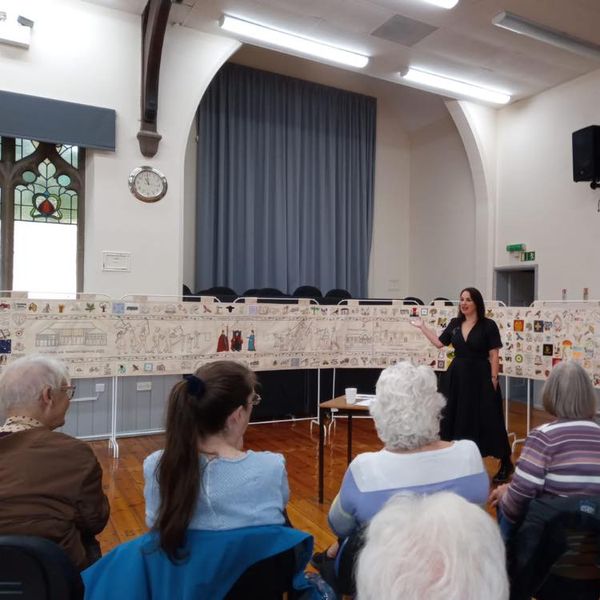
Today I have had the pleasure of sharing ‘The Making of The Brailsford Bayeux’ with Matlock Needlecraft Group. It’s truly wonderful not only to share the incredible achievement of this project but also to inspire other communities and groups to undertake similar projects, albeit on what I suspect will be on a somewhat smaller scale.

The Matlock Needlecraft Group have an impressively long history and some incredibly talented and knowledgeable stitchers amongst them (some of whom have been members since the late 70s!). My visit coincided with early discussions about a potential new collaborative project of their own. They are considering creating a piece to celebrate the recent relocation of works historically created by the group to Masson Mills.

They group (whom I can honestly say are the most incredibly warm, friendly and welcoming women) meet at The Imperial Rooms in Matlock on Wednesday mornings. They welcome stitchers and knitters of all ability levels. If you enjoy stitching or would like to give it a go, do pop along to a meeting or call Lesley on 07773 950636 for more information. I’ll certainly be keeping in contact to see how their project develops.

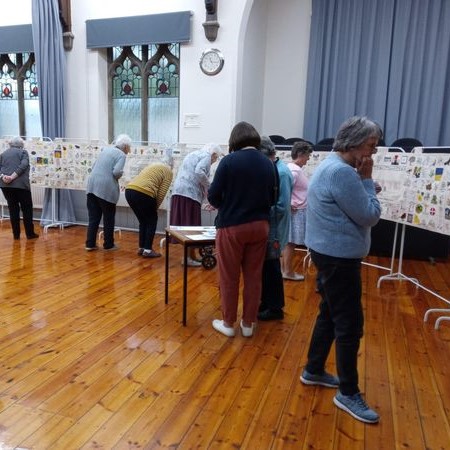
The Brailsford Bayeux is now ‘on tour’ and we welcome interest from groups, communities, museums and venues who would be interested in displaying the embroidery and or having a talk about the process of the making of it. Please email me Laura_Burrill@Outlook.com for more information.

The Brailsford Bayeux… Threads of connection

The dust has settled after a whirlwind community project which took over not only my life but the lives of many within our sleepy Derbyshire village of Brailsford.

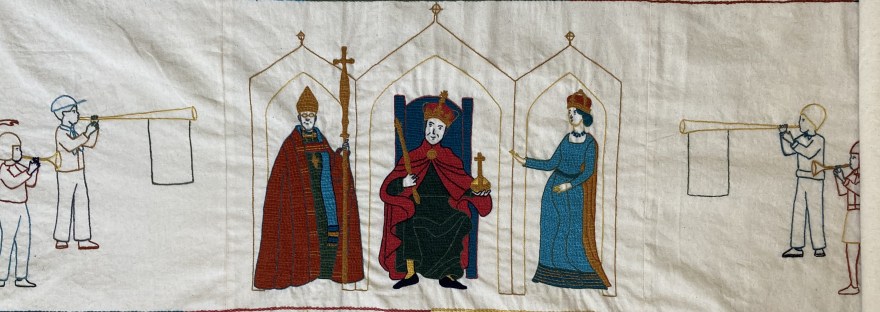
Our aim was to create a narrative embroidery to commemorate the coronation of King Charles, inspired by the Bayeux Tapestry. This was to take the form of a central panel depicting an imagined scene of the Coronation Day. King Charles, Queen Camilla and the Archbishop of Canterbury were to take centre stage; with a procession of some of the community groups we have here in Brailsford, streaming from community meeting places. This central story was to be surrounded by, we hoped, 100 embroidered squares to create a border top and bottom.

We wanted to include and encourage as many people as possible within the community to take part. And wow, people did. With open hearts, minds and enthusiasm.

This project has been heart-warming and humbling. Participants willingness to step out of their comfort zones and try something new or share their time, experience and knowledge has meant that together we have created something far beyond our wildest dreams.

For many taking part was not easy, but that didn’t stop them. From taking days off work and organising child and pet care, to overcoming significant physical and mental health barriers, villagers joined us.

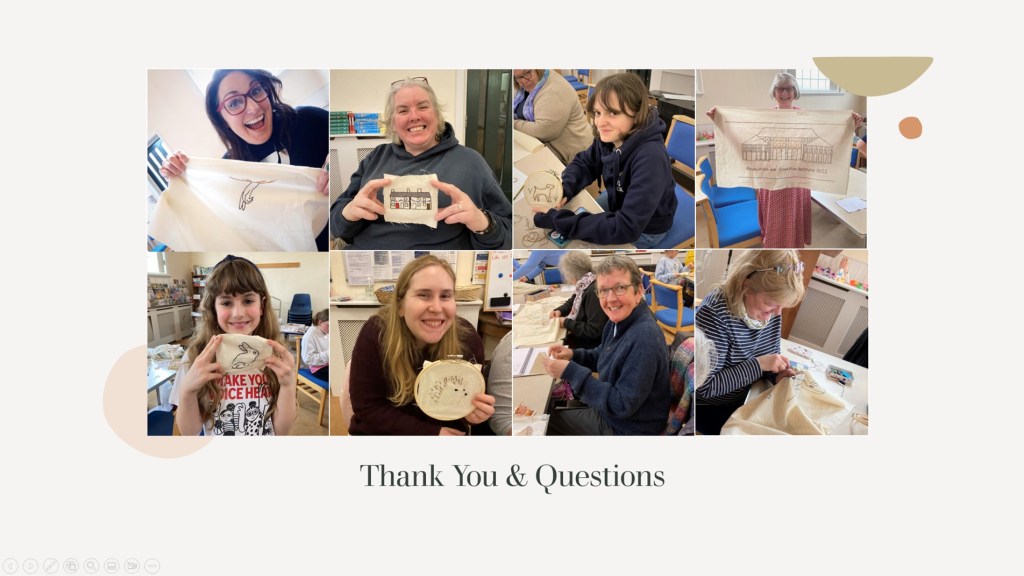
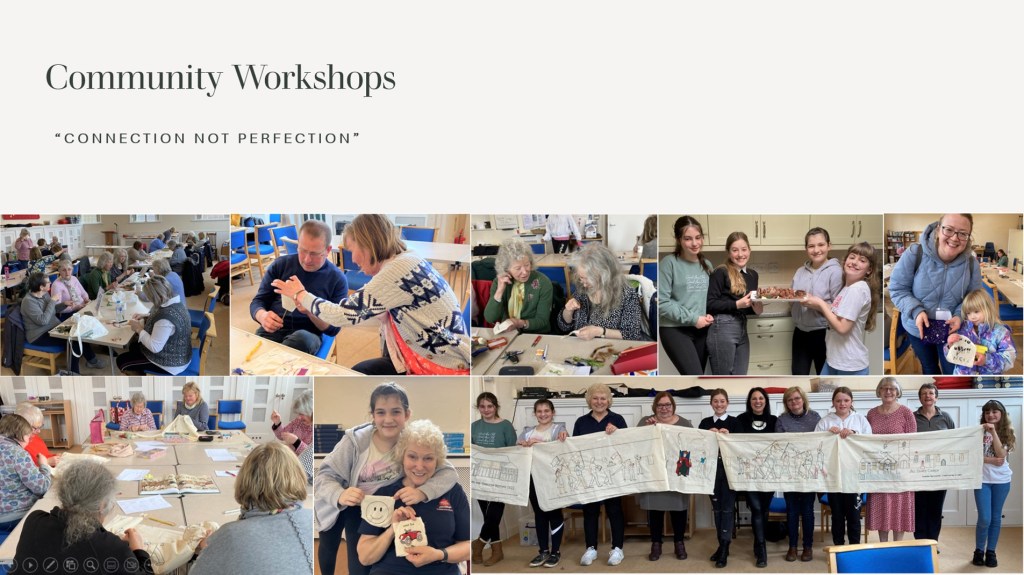
In workshops and from homes participants overcame these barriers to be faced by something that clearly had left an indelible, and for some, unpleasant mark from their school days, needlework! Despite fears of ‘I can’t do this’ and I’m not good enough’ the mantra of ‘connection not perfection’ soon meant large numbers of beautifully crafted squares began to pile up. We received a whopping 406 squares in total, 4 times our original goal. These squares tell stories of the place we call home, they share memories, document our passions and communicate our love and gratitude.

As confidence grew so did the number of those working on the central narrative embroidery. 26 women worked this panel in just 7 weeks. It is an incredible achievement, not helped by my last-minute decision to add a border. I am so incredibly grateful to you and every single one of the 282 individuals who have taken part.

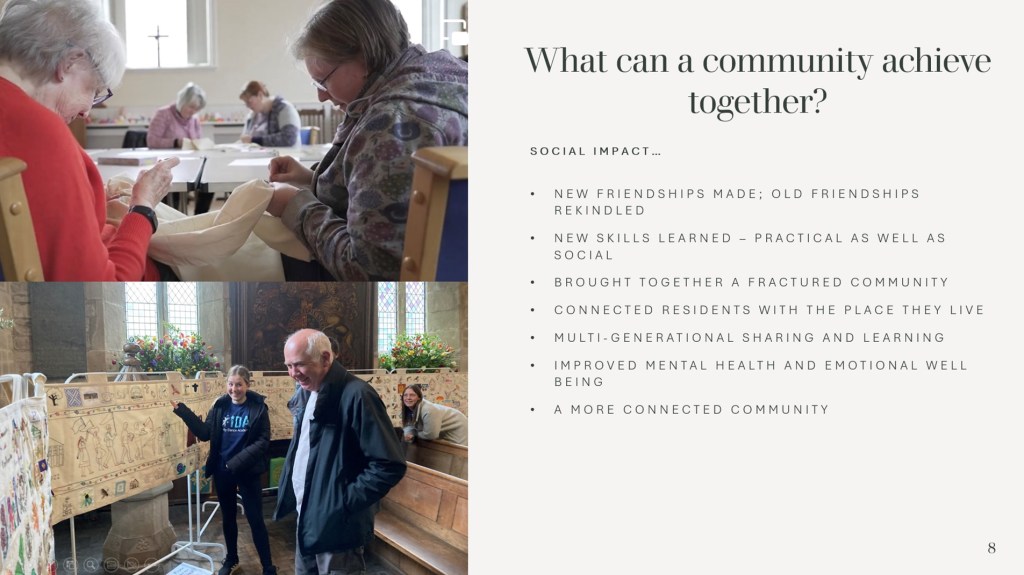
I have witnessed disparate parts of our changing and expanding community come together, neighbourly disputes resolved, mental health issues relieved, loneliness diminish, new friendships made, old friendships rekindled. With participants as young as 2 and as wise as 94, knowledge, skills and stories have been shared between multiple generations, we have learned from each other and become more connected with the place we live.

It has been an honour to be a part of this project and I hope that everyone who has taken part is proud of what we have created together. It is more than an embroidery, it represents the threads of our community which have strengthened, developed and expanded over the last three months. These threads of connection now bind us together whilst also reaching out to future generations. They tell the story of the place we live and who we are.

The Brailsford Bayeux is now going on tour! Its next stop will be the Ashbourne Methodist Church from Thursday 13th July – Saturday 15th July… keep an eye on the Brailsford Bayeux Facebook page for further announcements.

Huge thanks to every single person that took part, shared their time and talents. A special thank you to Teresa Mikula & Richard Faulkner for capturing the project on film.

Laura x